August 22, 2026
Stornoway is on the Isle of Lewis and is part of Scotland. There are 500 islands that make up the Hebrides. Only 50 of the islands are inhabited. We were here in 2024 and took a great sea safari where we saw hundreds of puffins but this time around Princess had booked up all the seats on the sea safari, tripled the price and shortened the tour. Plus it is not puffin season. Instead we opted for a Princess tour that took us across the island. We had a great guide who talked all about life on the island. We passed by 1 small village on the water and our guide told us that was where Donald Trump’s mother was born and lived prior to immigrating to the US. If only we had a Time Machine and could convince her to stay on the island. She also told us that Trump’s sister has visited several times and donated over 100,000 dollars to develop Hospice on the island. The island is a lot like the Shetlands with miles and miles of peat bogs. Like on the Shetlands they cut the peat and let it dry and use it for firewood to keep the houses warm. The peat is not needed anymore but they still go out and cut the peat.
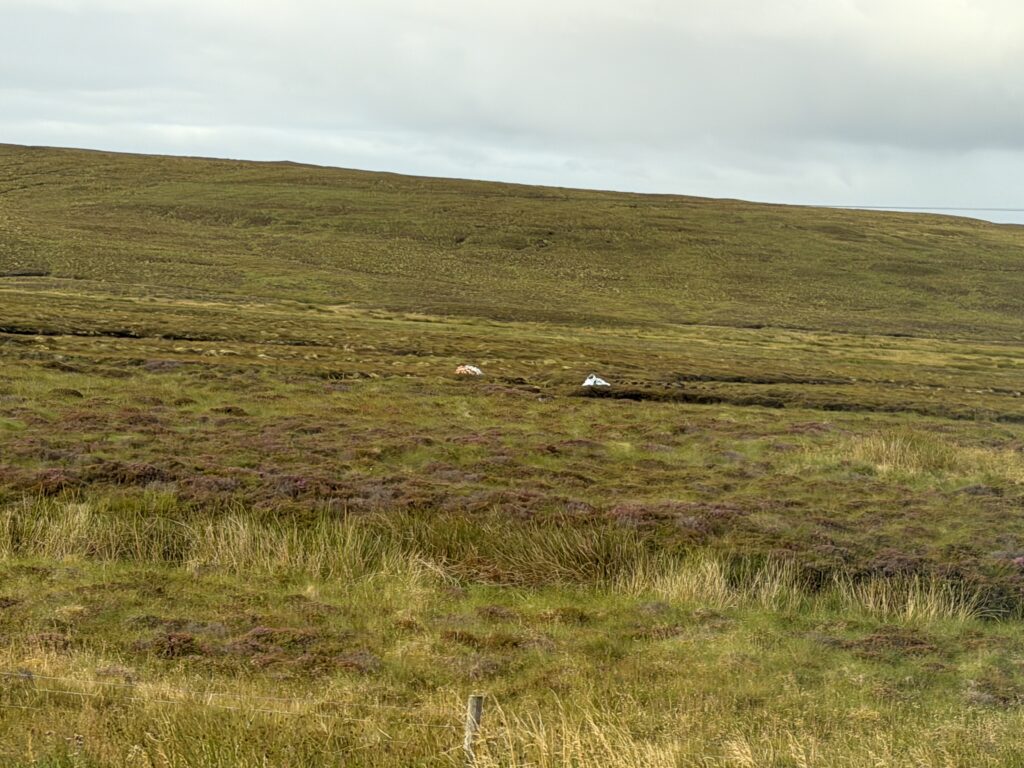
The peat takes 2 to 3 months to dry and they leave it on top of the heather to dry. It gets turned in 3 weeks and it develops a crust. Once it is dried it gets put in plastic bags to prevent moisture from getting in and stays out on the field until they can get a truck to transport it. Cutting peat is usually a family affair.
When the island was first settled they built houses made of stone with driftwood or whalebone timbers, a base layer of turf sods, and a thick top thatch of cereal straw or heather. They had no running water or electricity and used the peat bricks to warm the houses. In the 1950s the government made everyone leave the “black houses” because of sanitary issues but the houses remain throughout the island. They call them “black houses” due to the soot that builds up on the walls of the house due to the burning of peat. We went to a small village that has maintained all the black houses.
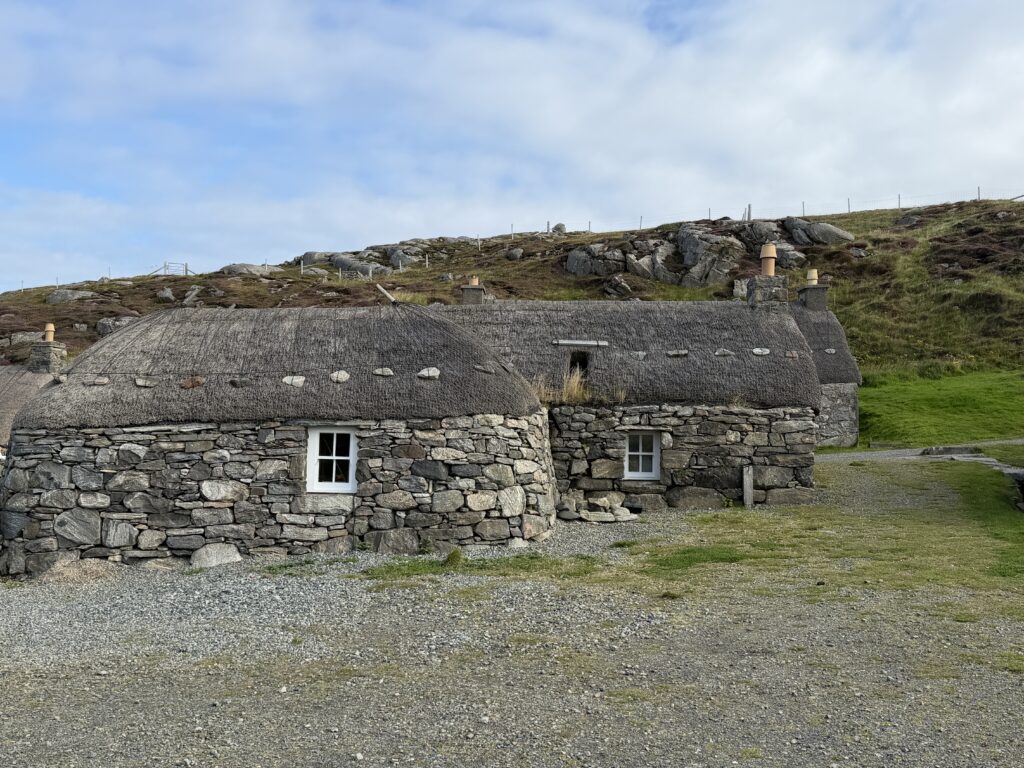
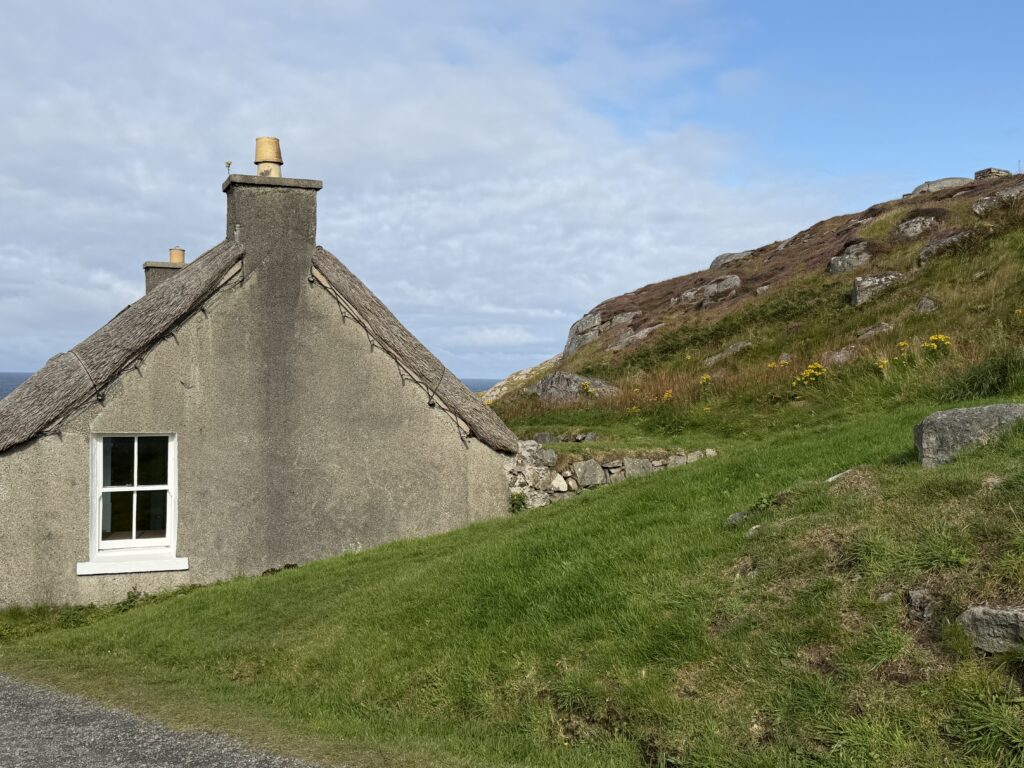
The houses usually had 2 rooms and had low doorways and only 1 or 2 windows.
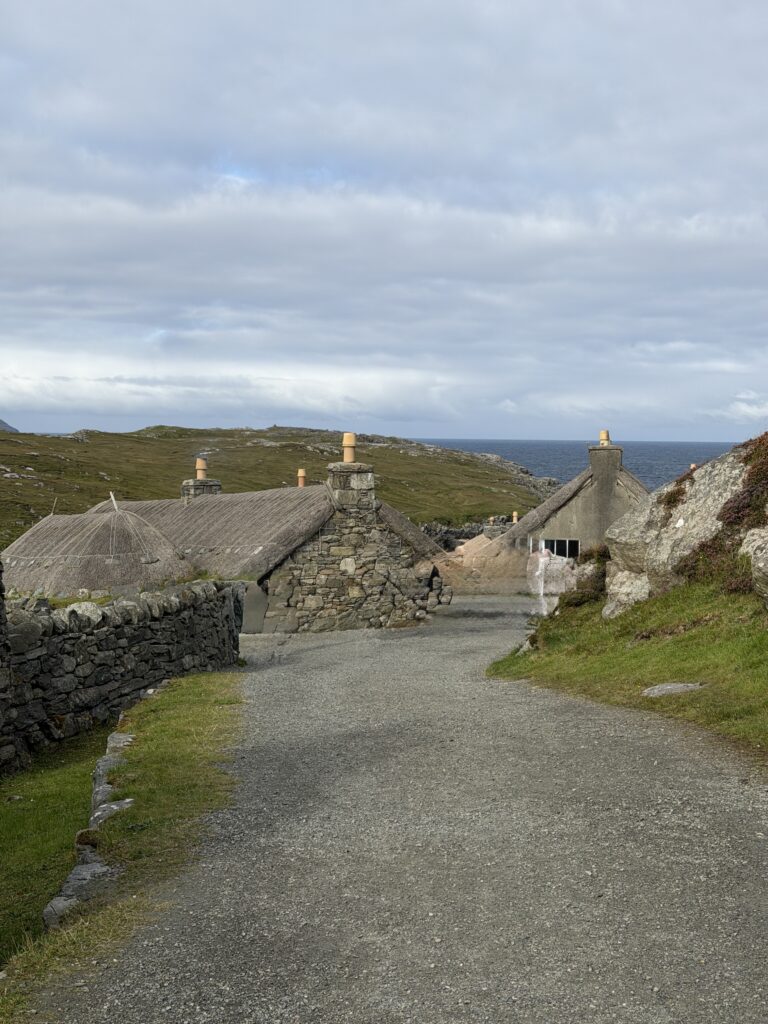
They turned one of the black houses into a gift shop and another into a cafe.
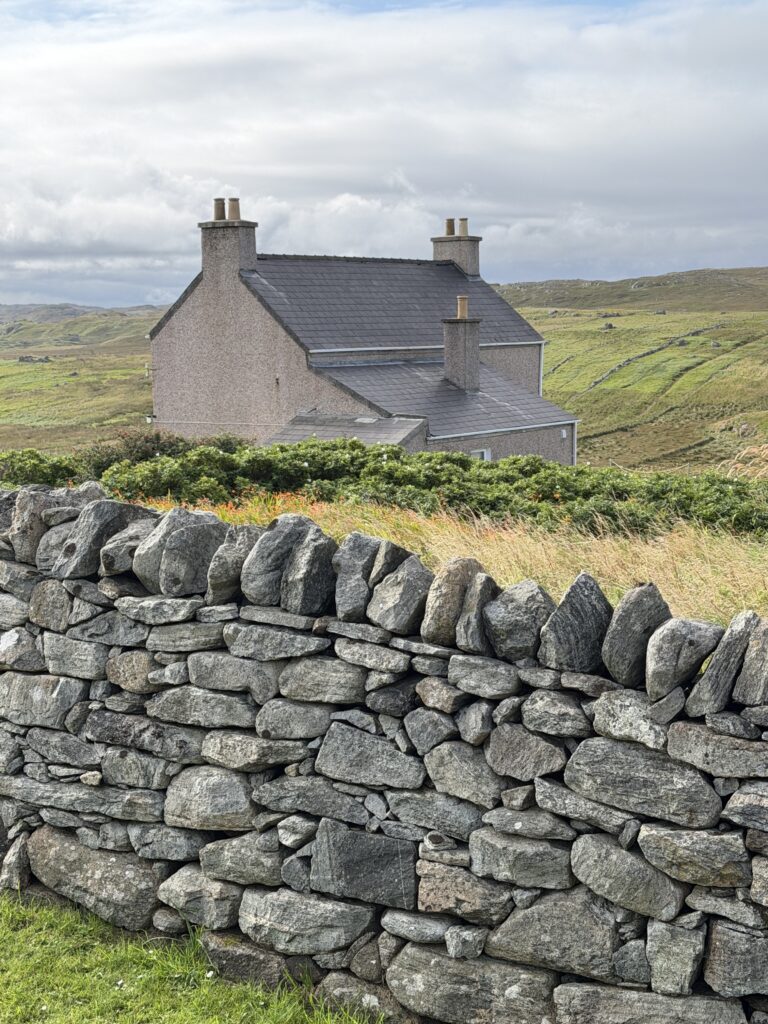
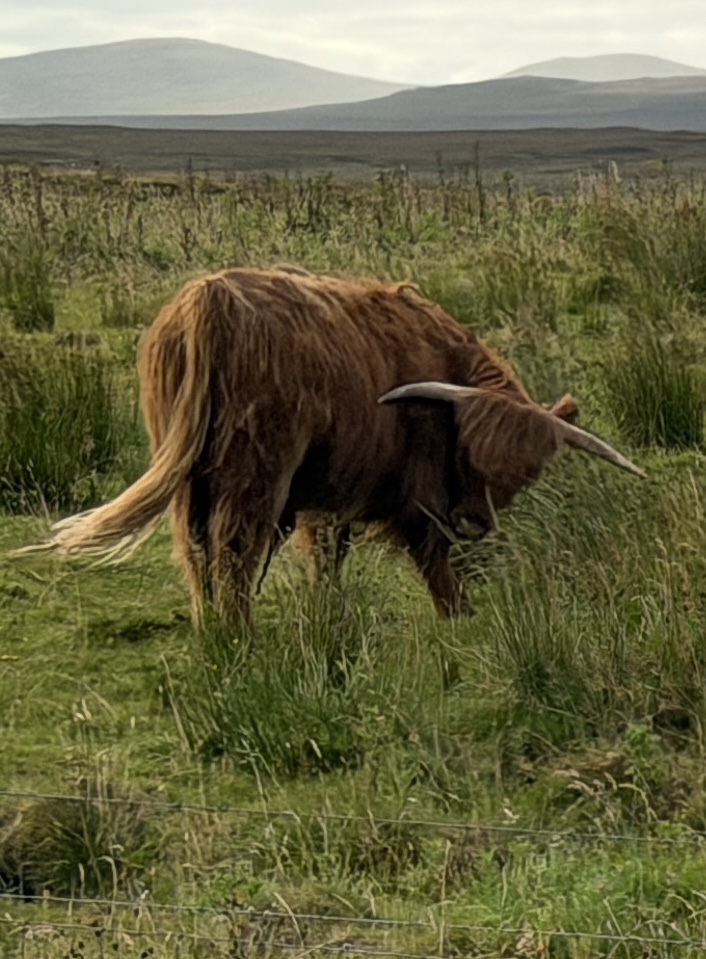
A more modern home and they also have some Highland cows on the island along with a lot of sheep.
After we visited the black houses we went to the Carloway Broch fortified stone tower which was built around 100 BC and is one of the best preserved in the islands.
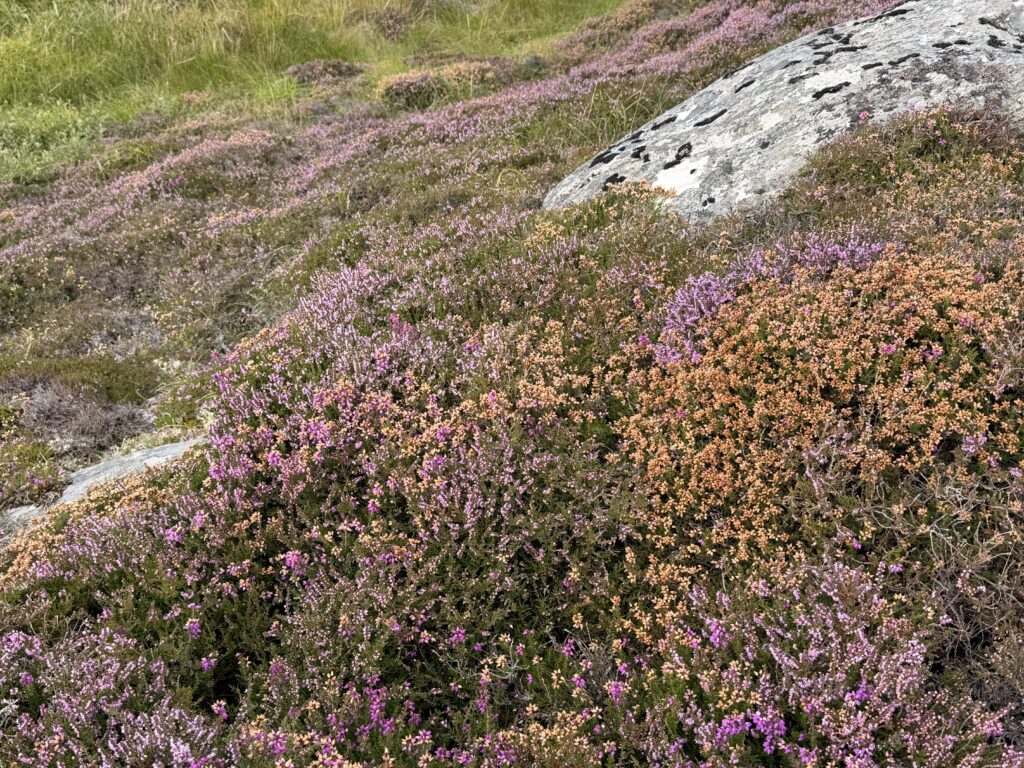
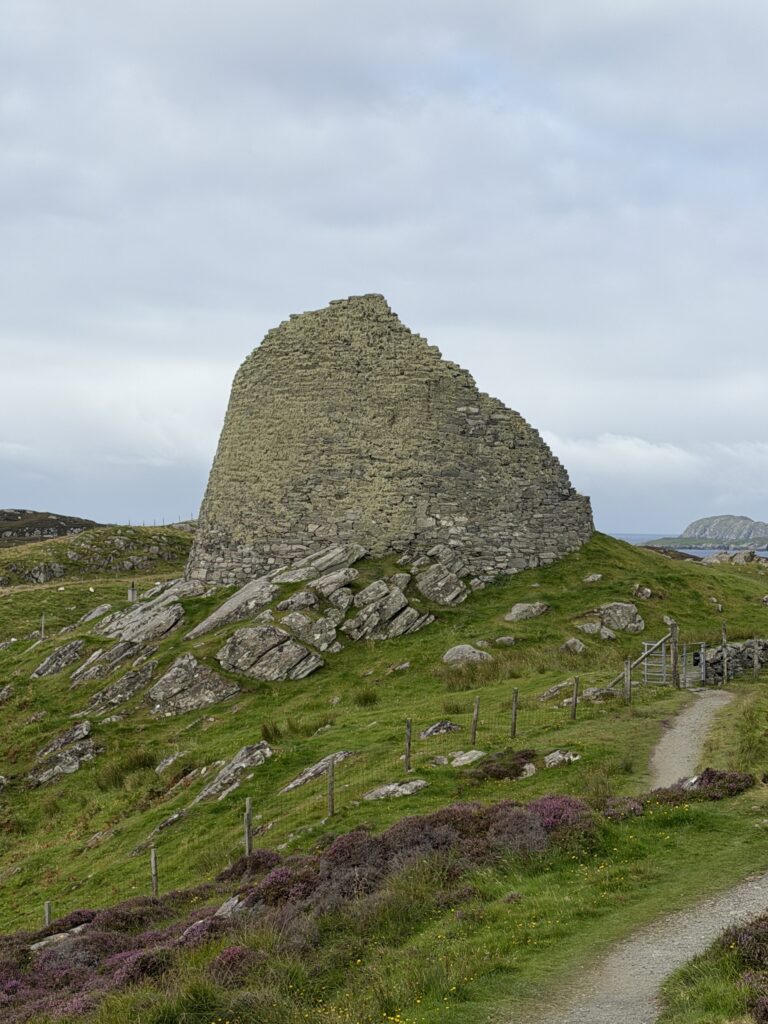
All the different colors of the heather that cover the peat bogs. The Broch on the right is a round circular tower that has a small door to enter and usually has 3 floors, the bottom for animals, the middle for living and the top for sleeping. The tower is 29 feet high and 49 feet in diameter. This one got halfway taken apart centuries ago to use the stone for the newer houses. You could also visualize the Atlantic from the tower so they could keep an eye out for Vikings.
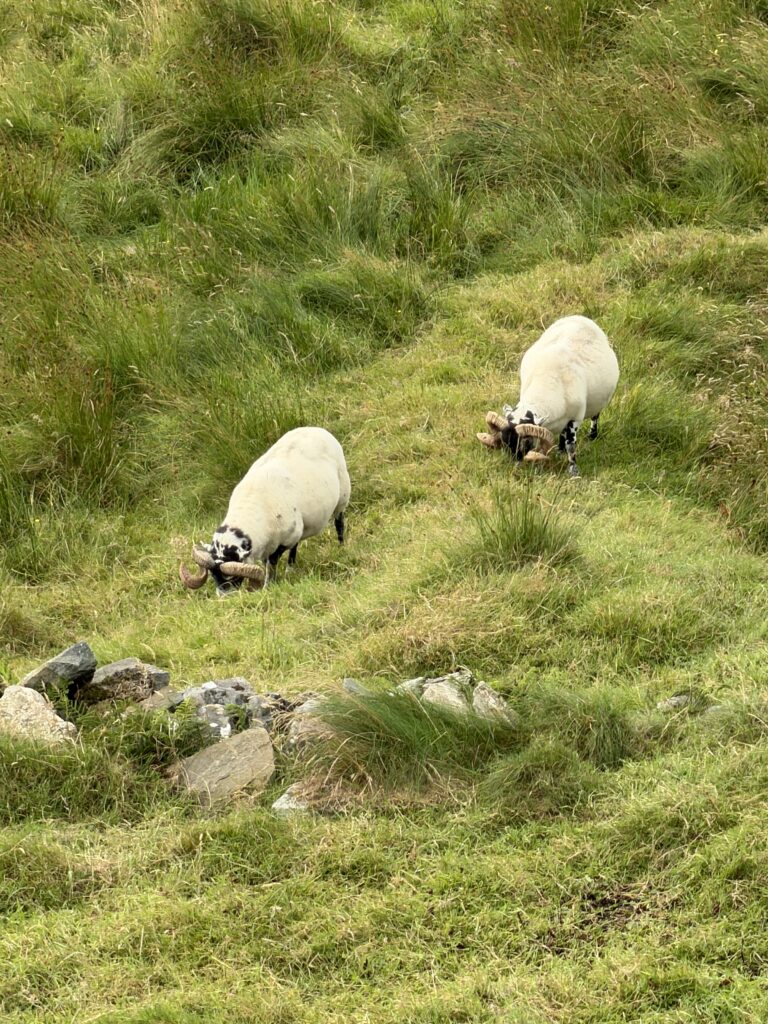
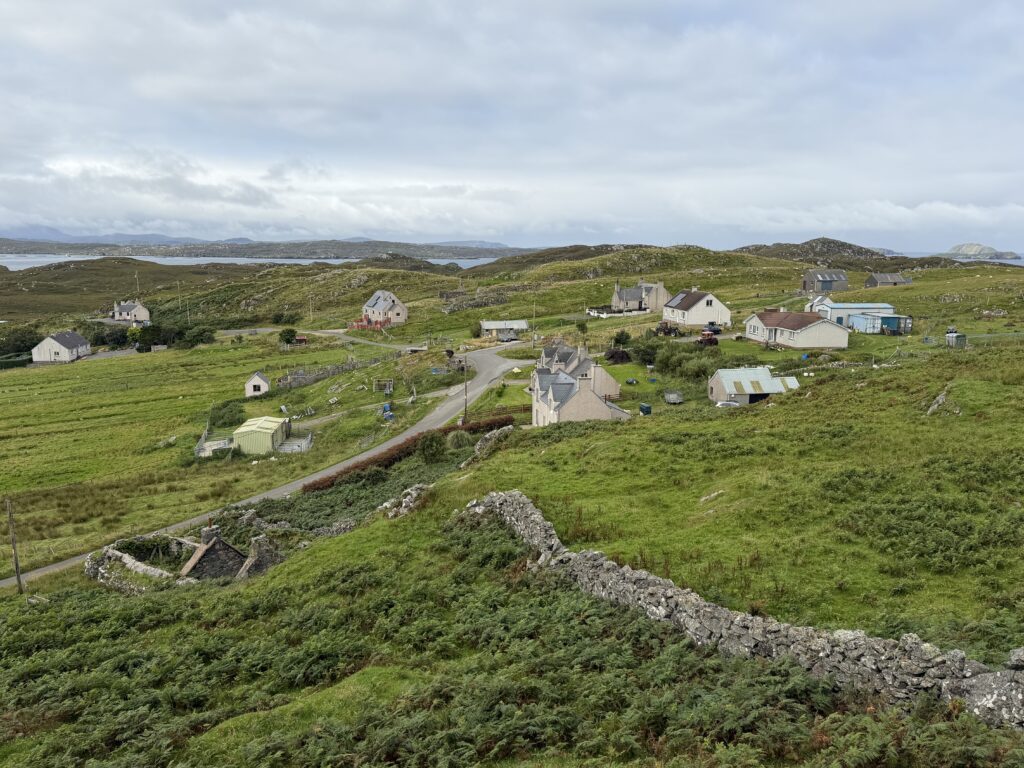
The island has lots of sheep, the white sheep with black faces. On the right is the view from the Broch.
After our visit to the Broch we passed by 3 examples of the Standing Stones at Callanish. The stones are over 5000 years old, pre dating the pyramids & Stonehenge, people believe they have special powers.
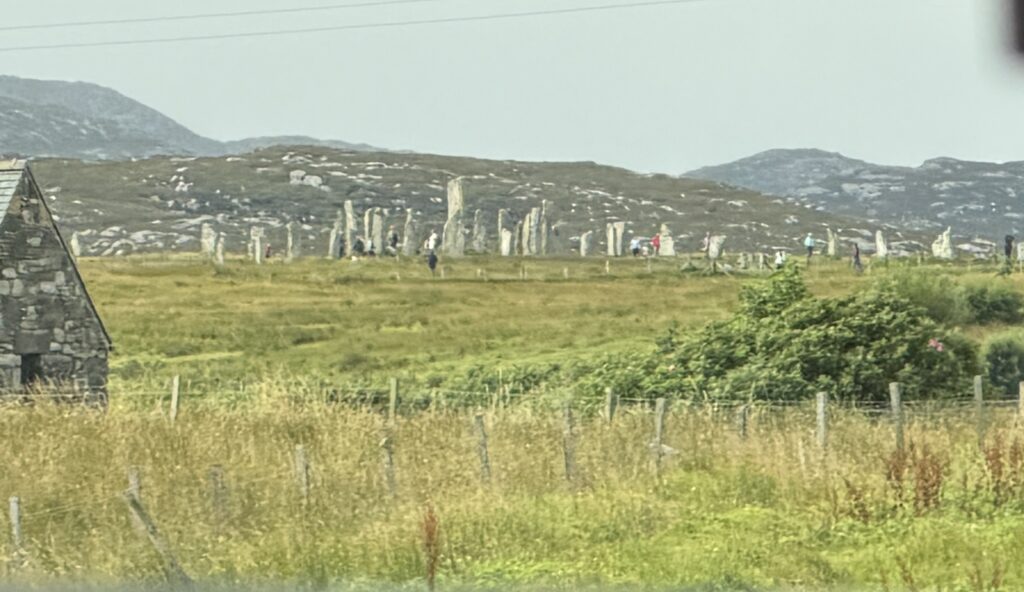
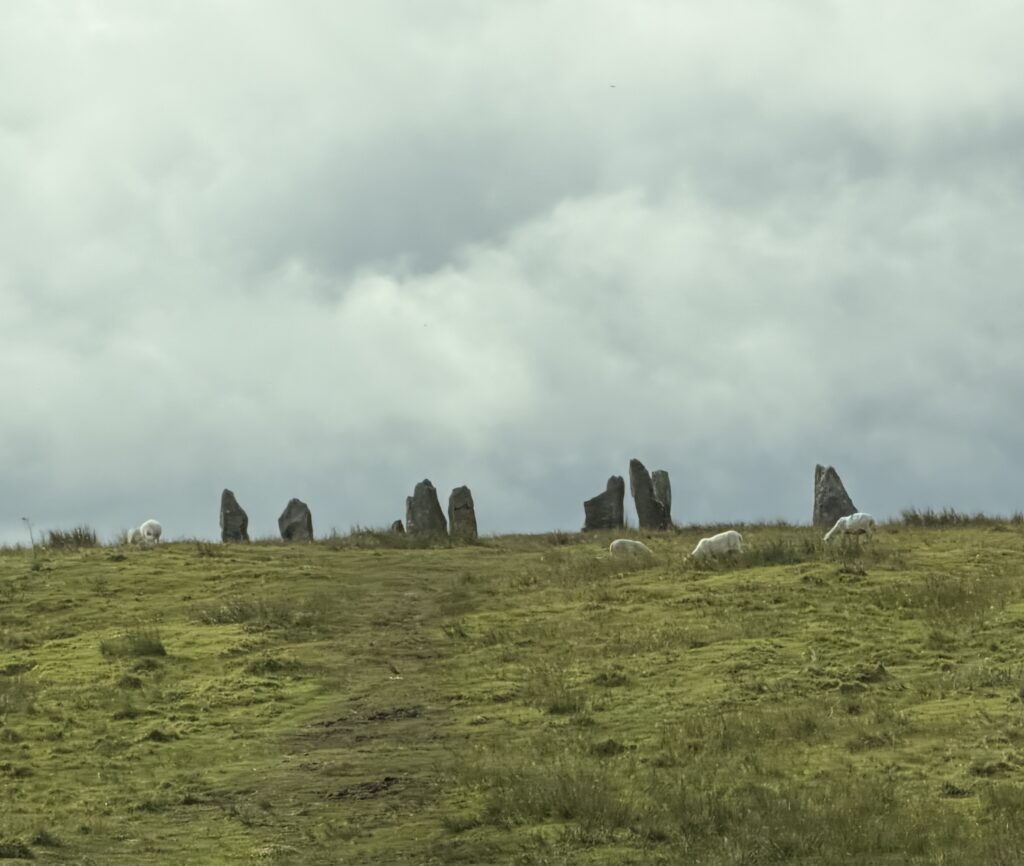
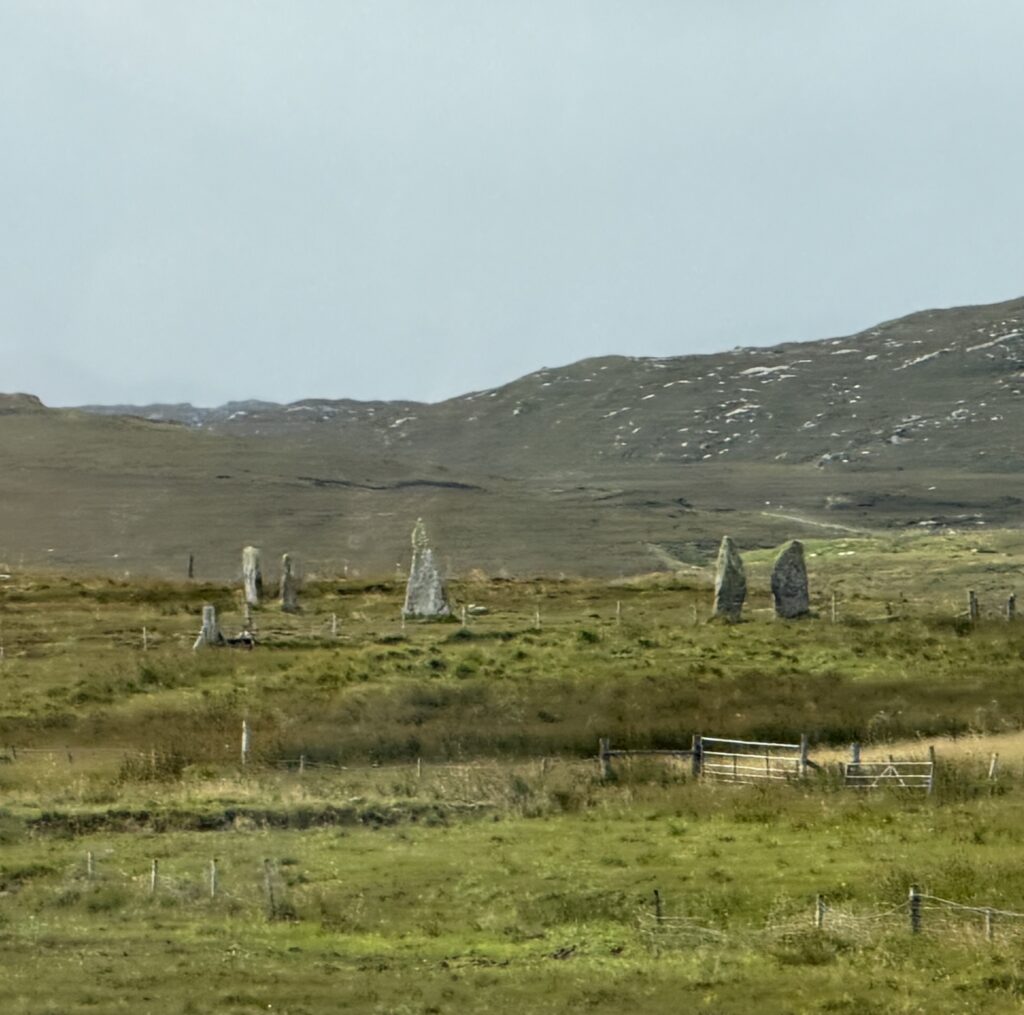
We were pretty far away from the stones and these were taken through the bus window. One of the sets of stones supposedly helps with fertility and people go here when they’re trying to get pregnant. According to our guide you felt a special energy from the crystals in the stone when you entered the circle.
We were dropped back off at the port at 12 and we got off our bus and hopped right on the shuttle bus to take us to town. They have a great trail that leads from the port to the town and takes you through trees and along the coast. When we were here last time we walked into town and then back home again but this time we took the shuttle.
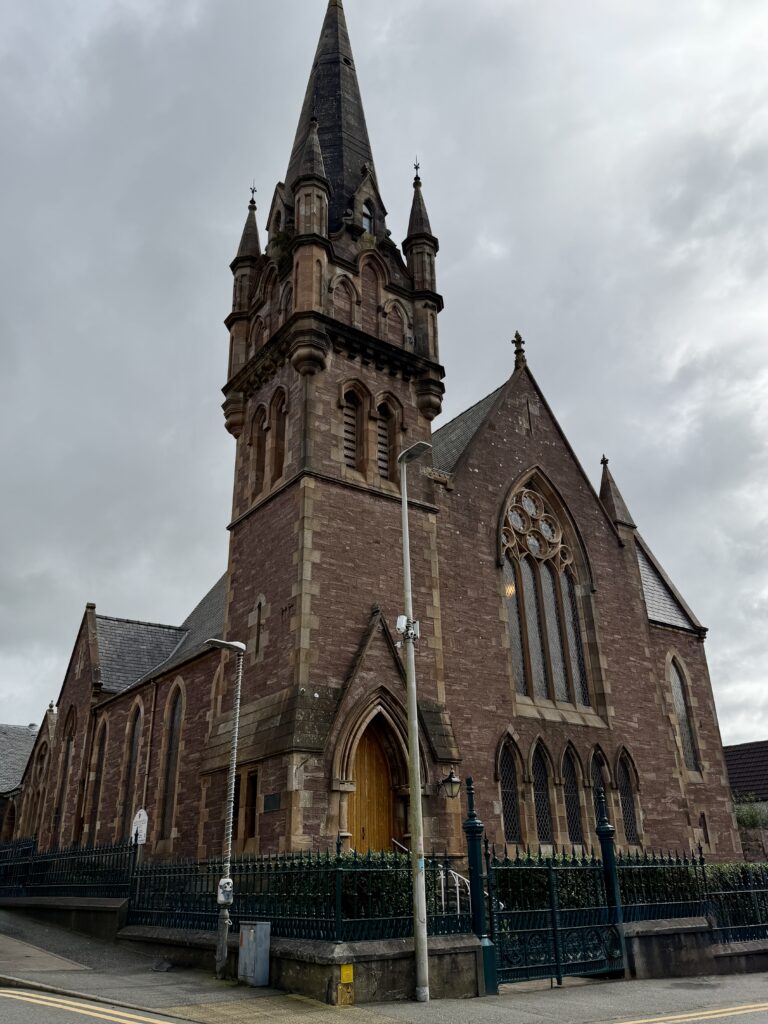
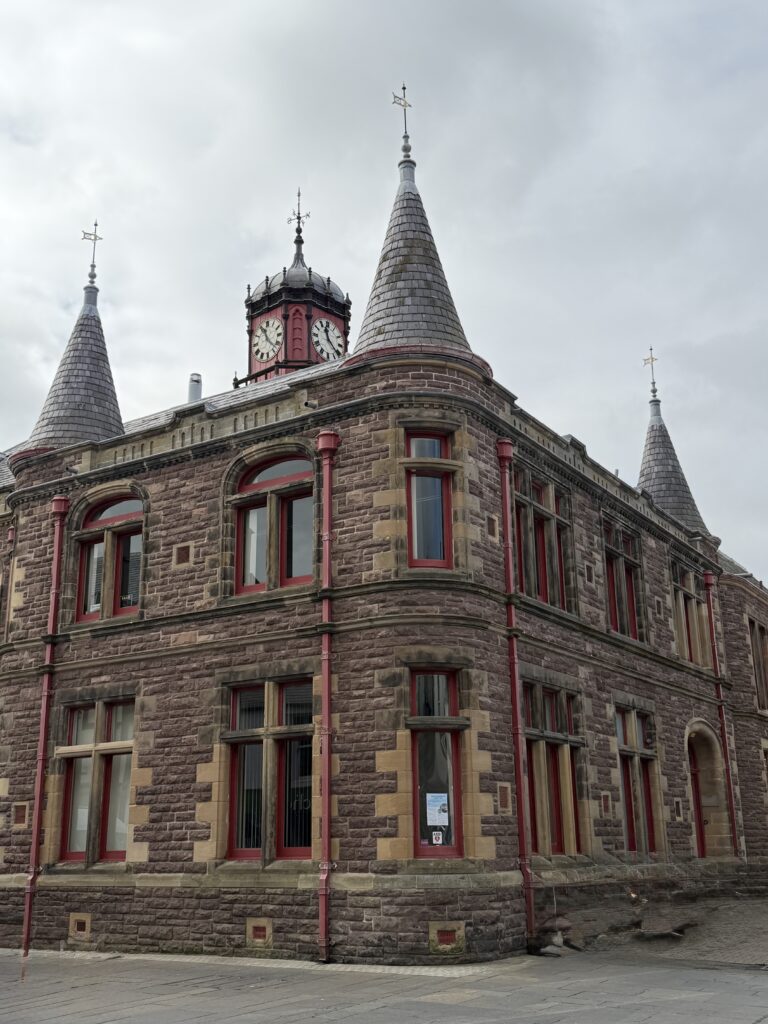
A couple of the buildings in town. We went into a few stores but mainly walked the town and looked at the buildings.
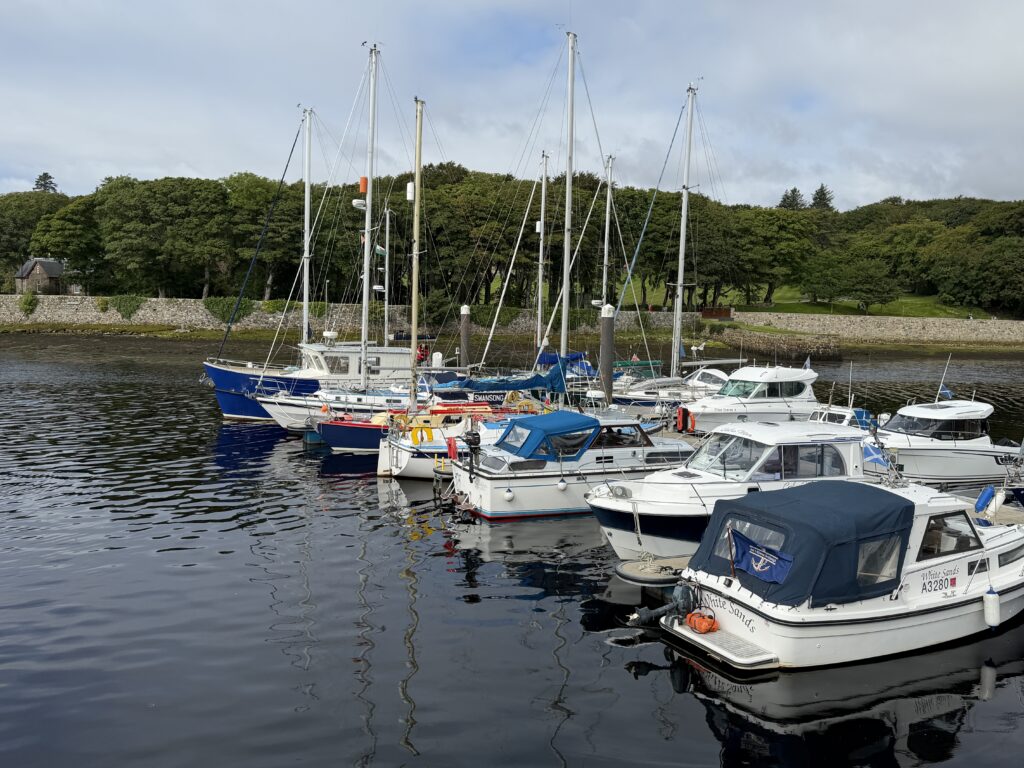
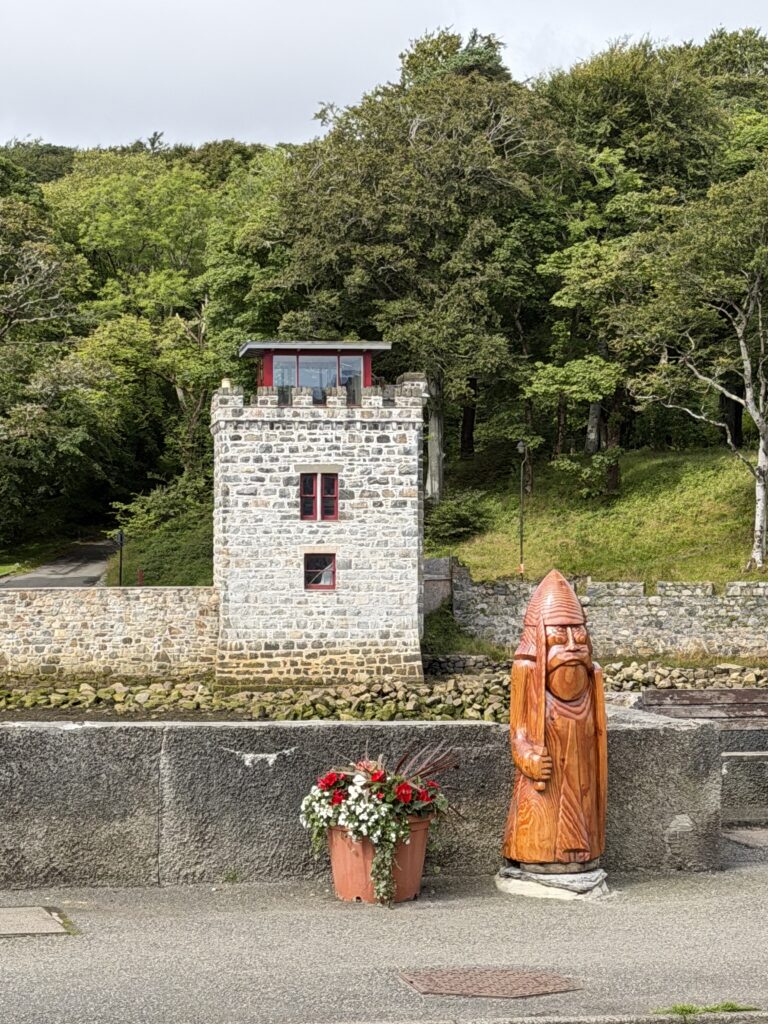
On the left is the harbor of Stornoway and on the right is a carving of one of the Lewis chessmen. The chessman are roughly 800 to 850 years old and the hoard was discovered in 1831 on the west coast of the isle of Lewis. At the time they were buried the island was part of Norway and it is believed that they were buried for safe keeping and never retrieved. The original pieces were carved from walrus tusks and the originals are kept in the Castle of Lews.
It started to rain a little bit so instead of walking back we took the shuttle.
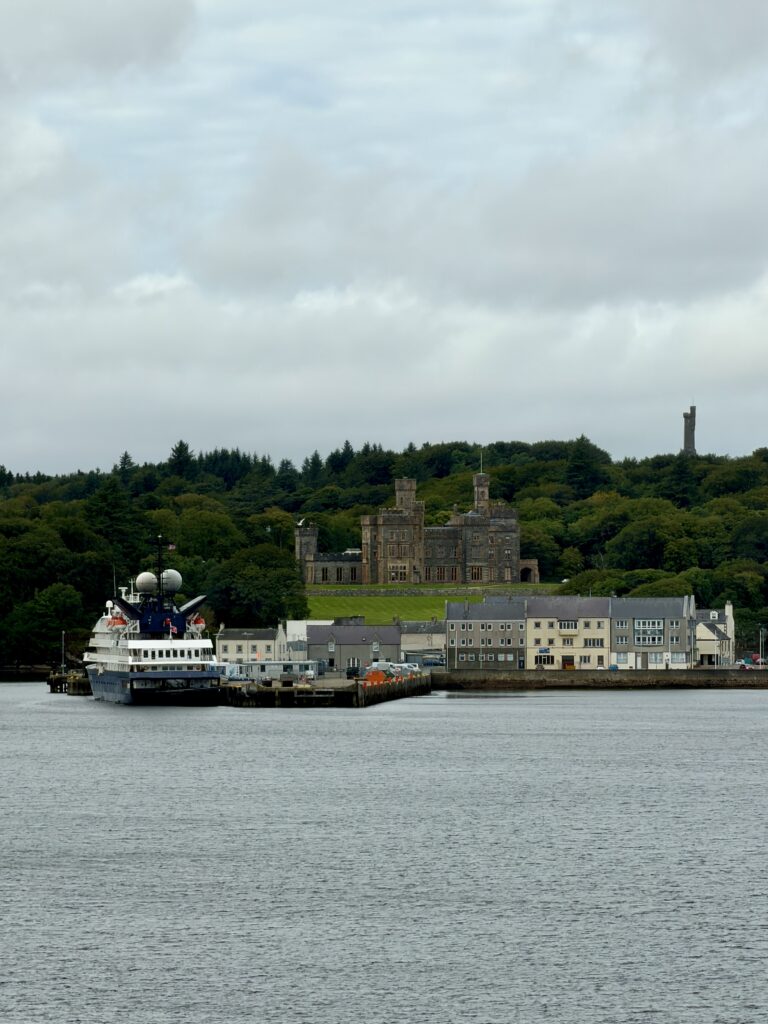
The Castle of Lews was built between 1847 and 1854 by Sir James Matheson who was a Scottish trader and made a fortune smuggling opium to the Far East. He planted all the trees on the castle grounds. The castle and the land are now owned by the people of Stornoway.
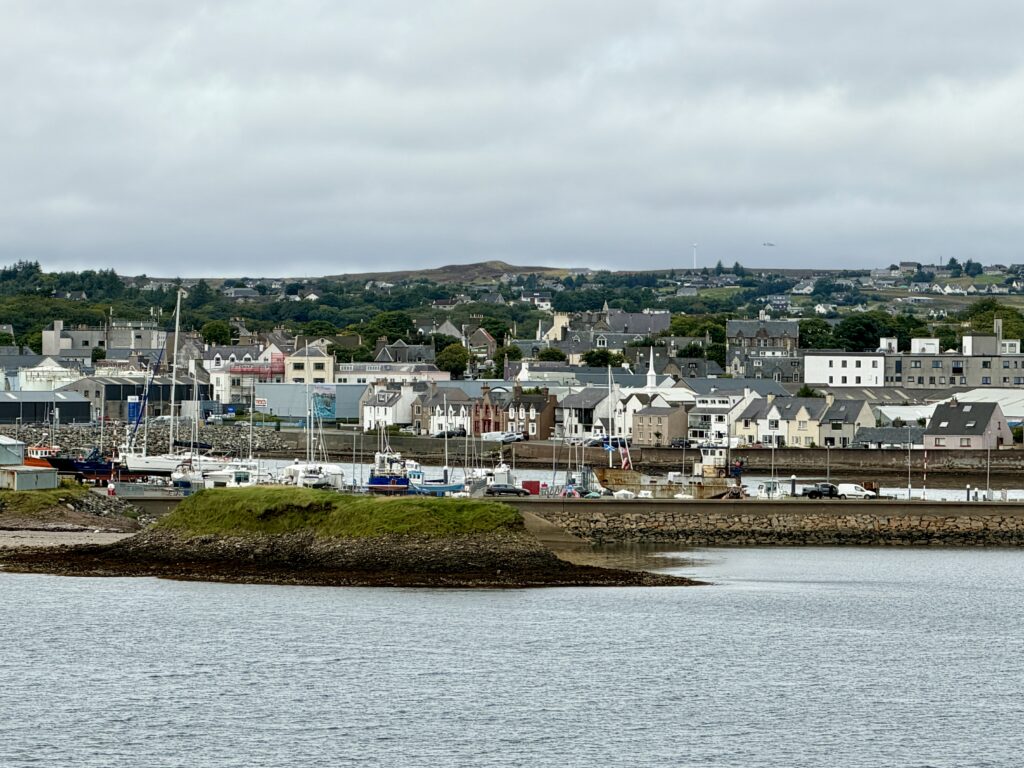
The town and harbor of Stornoway.
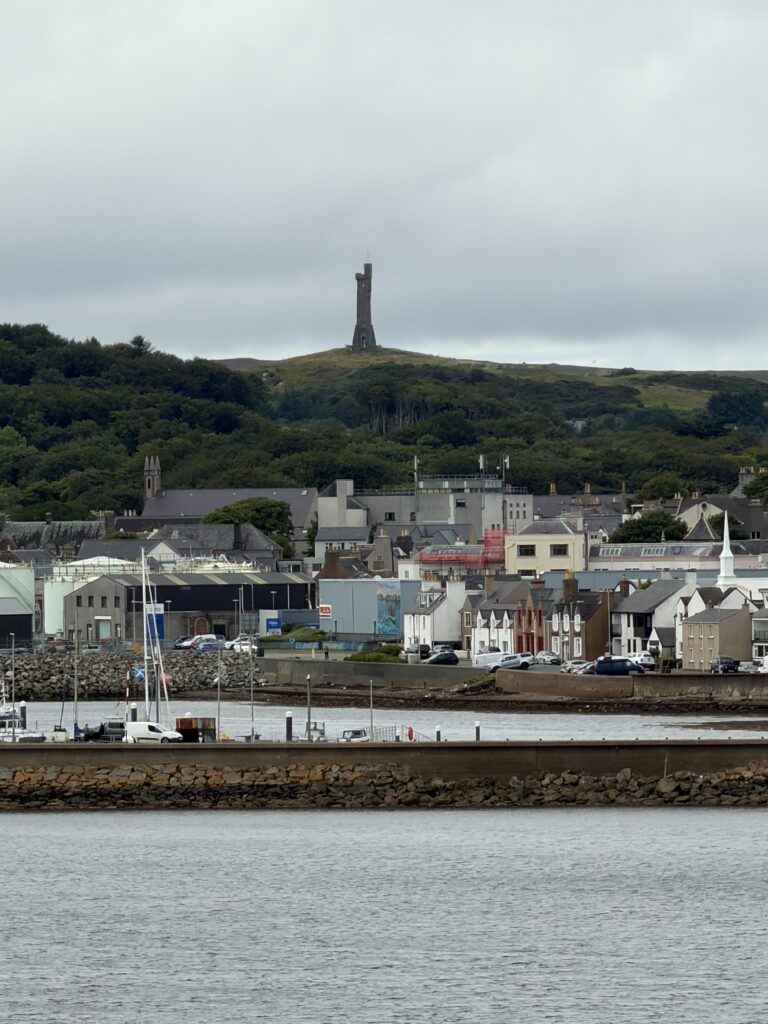
The towering monument which looks over the city and can be seen for miles, is a remembrance to 201 soldiers from WWI who, after surviving 4 years of war, were returning home on January 1st, 1919. It was 2am and there was a heavy storm and the boat was overloaded when it hit some rocks 20 yards outside the harbor. Only 79 soldiers survived. There is a buoy in the water to mark the wreck and it is a protected site since 60 bodies were never recovered. Everyone on the island was affected by this tragedy and most people lost a loved one or close friend. For years they did not talk about the tragedy because it was too painful but then, as years passed, they erected a memorial for everyone to see.
Our next stop is Belfast, Ireland