November 18th, 2026
The Amazon river is a muddy-brown color which comes from massive amounts of rock, soil, clay and organic matter carried by the water. Since it is dry season there are wild fires everywhere and it makes the view very hazy and a constant smell of burning in the air.

The Amazon river carries the largest volume of water of any river on earth. Its basin covers an area roughly seven million square kilometers and encompasses parts of Brazil, Peru, Columbia, Bolivia, Ecuador, Venezuela and Guyana.
Thousands of species of fish swim in its waters including piranhas and river dolphins.
There is a lot of traffic on the Amazon but most of it is barge traffic and locals fishing or traversing.
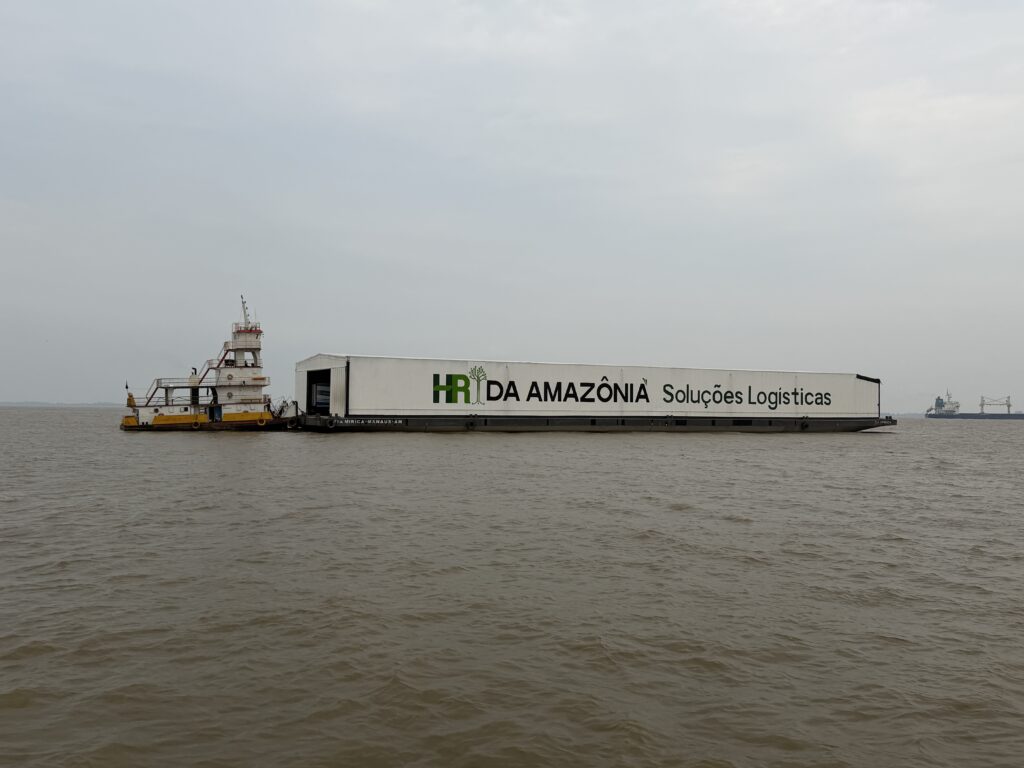
They have this floating warehouse that carries lumber from one town to another.
We anchored off the city of Santarem which is where the Amazon meets the Tapajos river. The 2 rivers flow side by side but do not blend together. Since the Amazon is muddy and the Tapajos is clear the demarkation is very obvious. We had a boat tour today and there were some issues with a platform that was supposed to be brought from town and would make it easier to load onto the local boats that we would be touring on. Apparently the platform they brought was much smaller than expected and much steeper to get to the boats and a lot of people on board have mobility problems so there was a long delay before the tours started.
Our tour took us to where the 2 rivers converged.
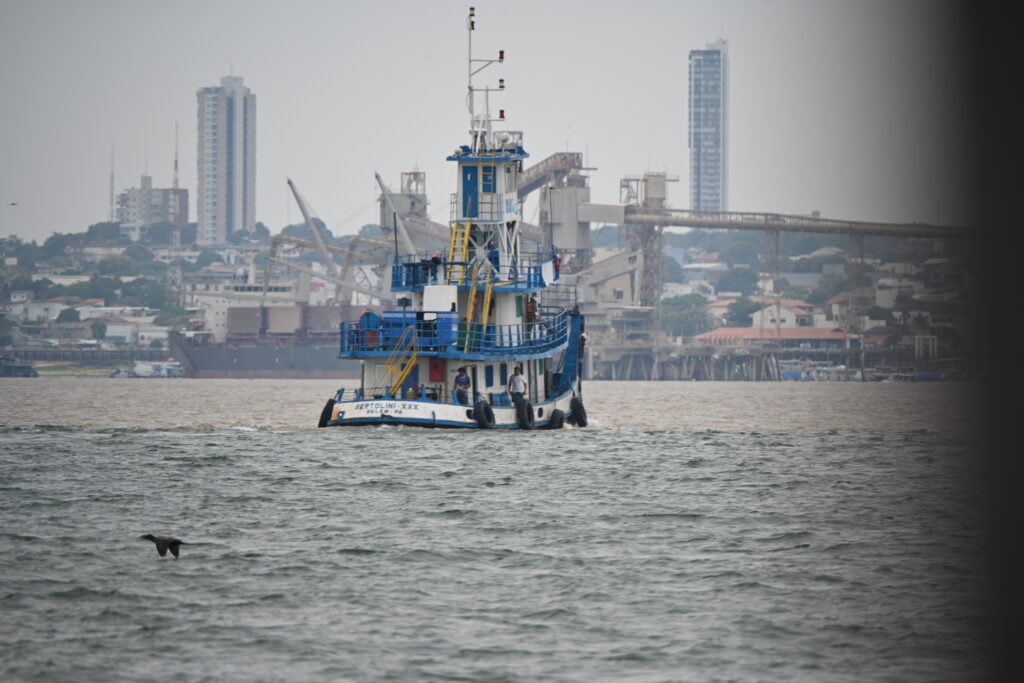
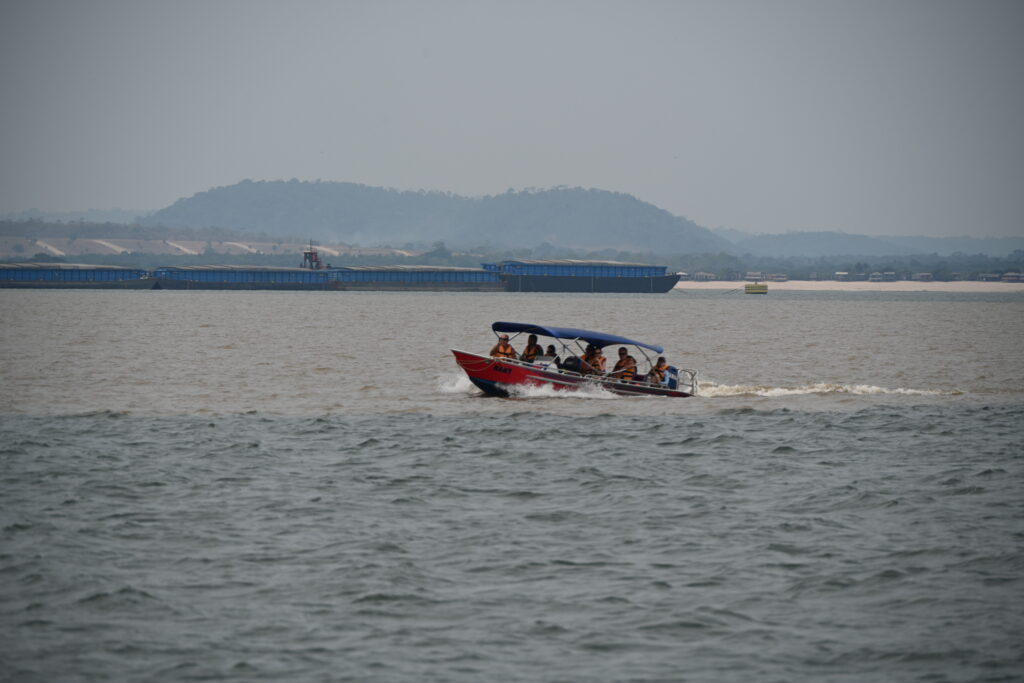
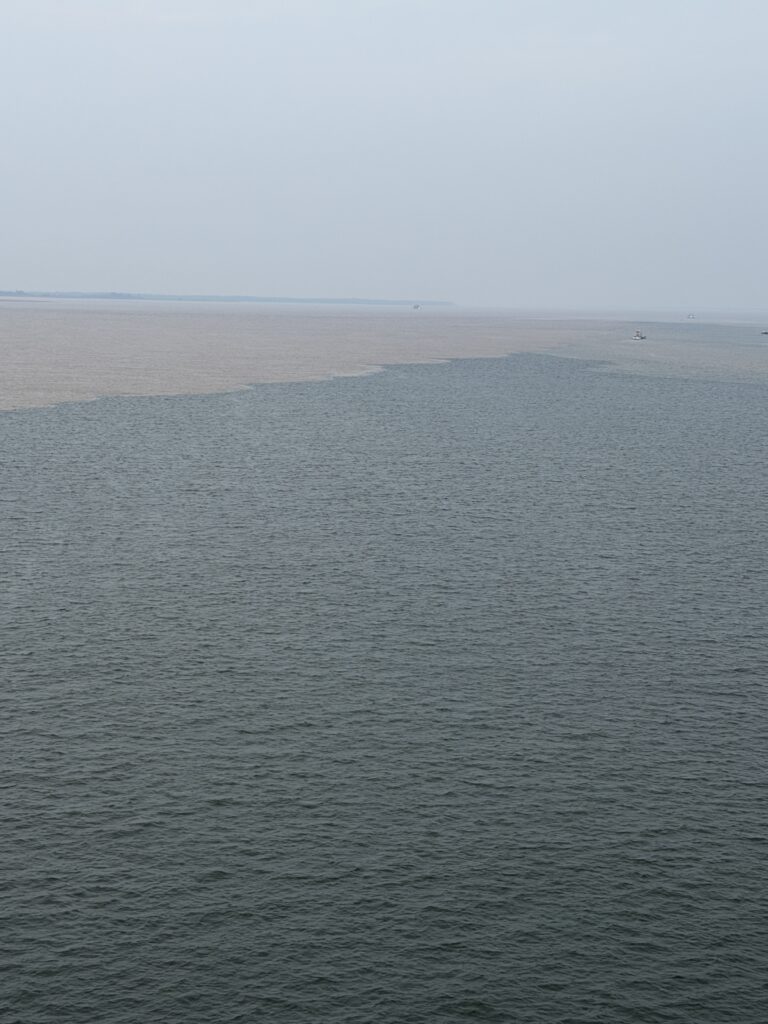
These pictures show you the difference in the 2 rivers. The Amazon is the muddy looking river.
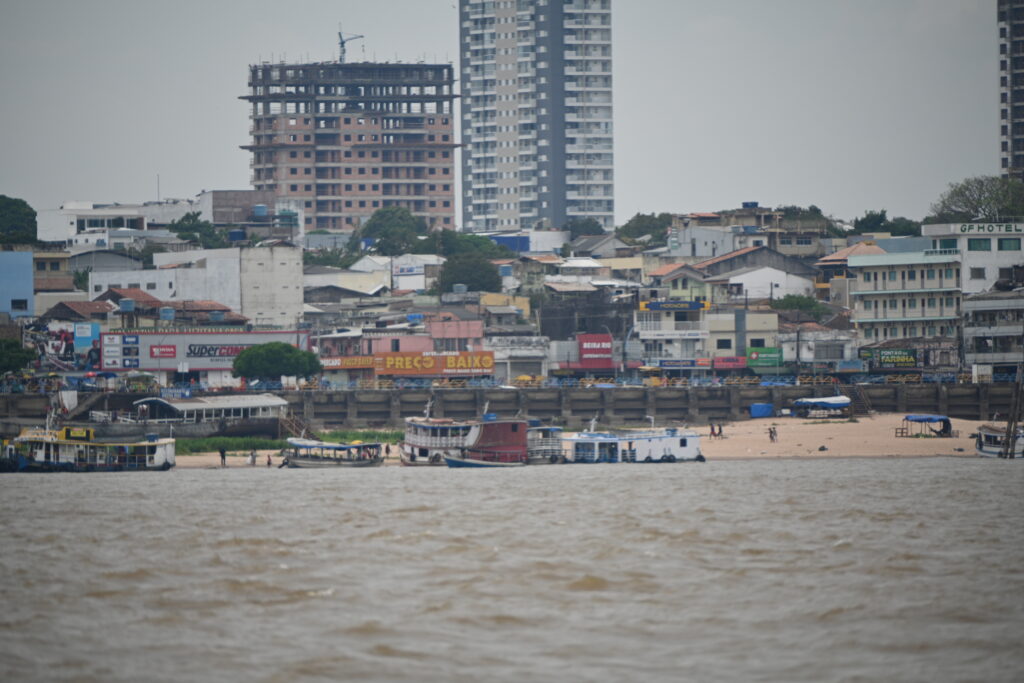
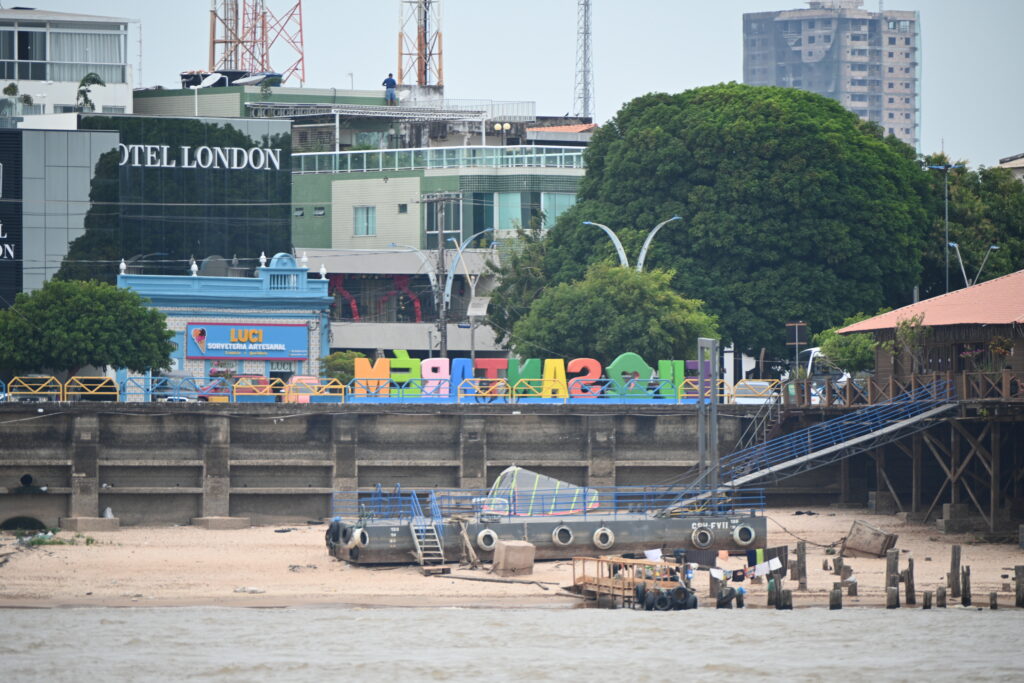
The city of Santarem which is considered a beach town. There are lots of bars and restaurants all along the waterfront.
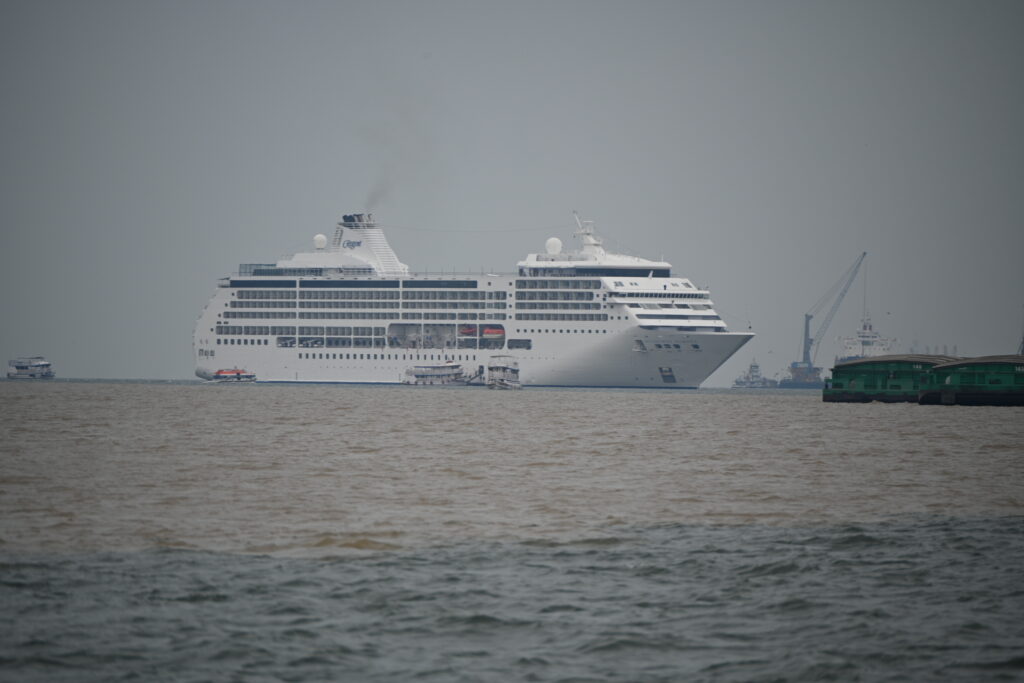
Our boat anchored in the Amazon.
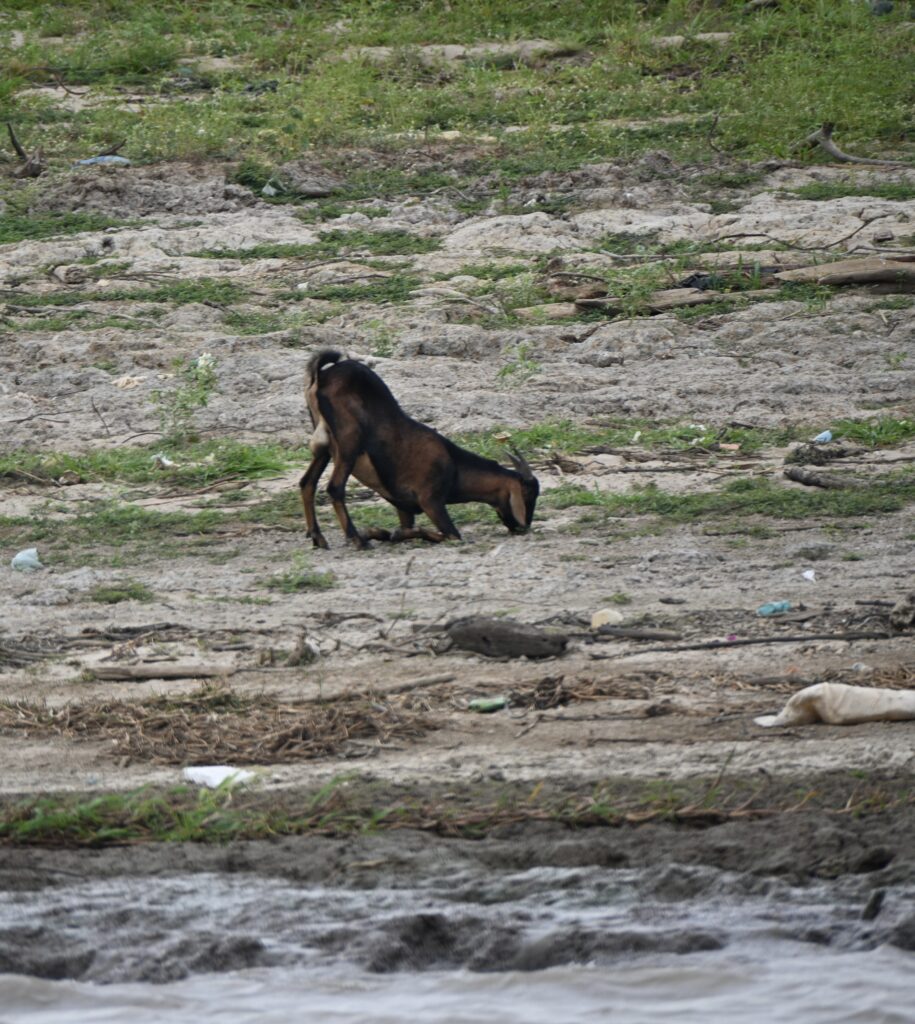
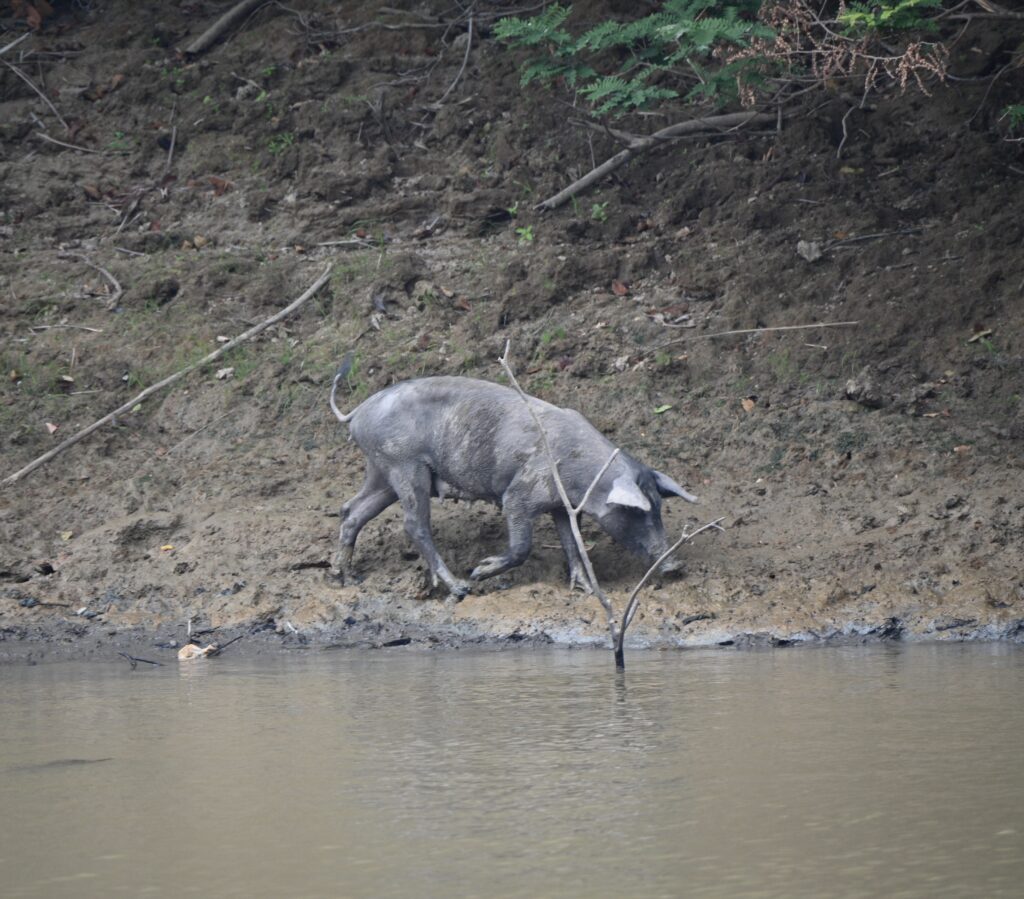
This is low season for the river. During the rainy season they say it rains everyday 100% of the time. We saw some goats and some pigs on the rivers edge.
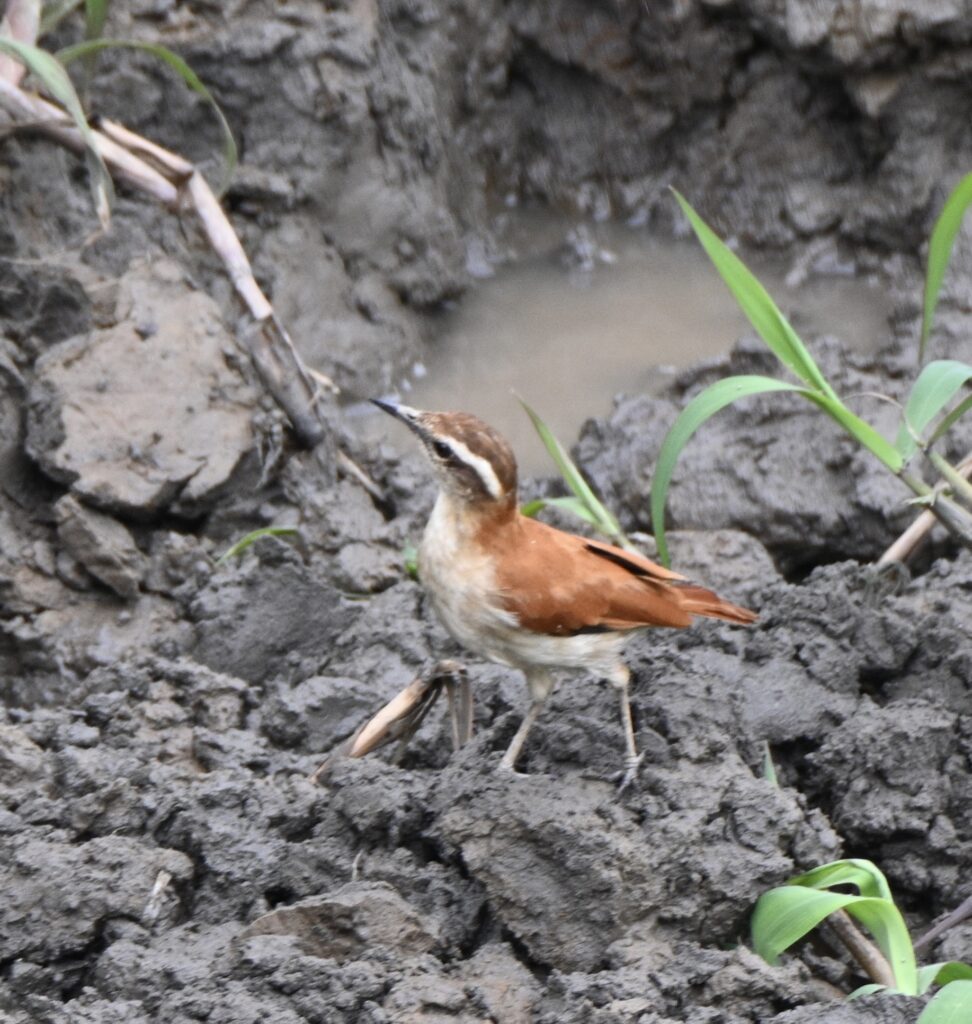
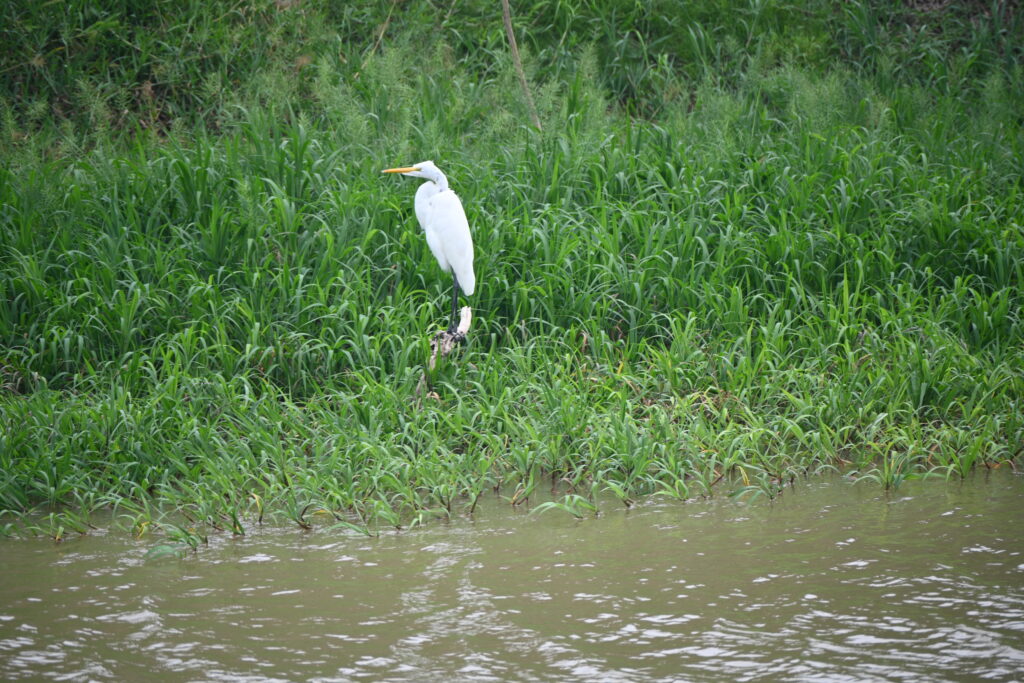
We saw several birds like this pale-legged Homero which are native to South America and the heron.
We sailed off a tributary of the river and the boats all tied to trees and we were given lines and hooks and fresh meat to fish for piranha. A few people are our boat caught some.
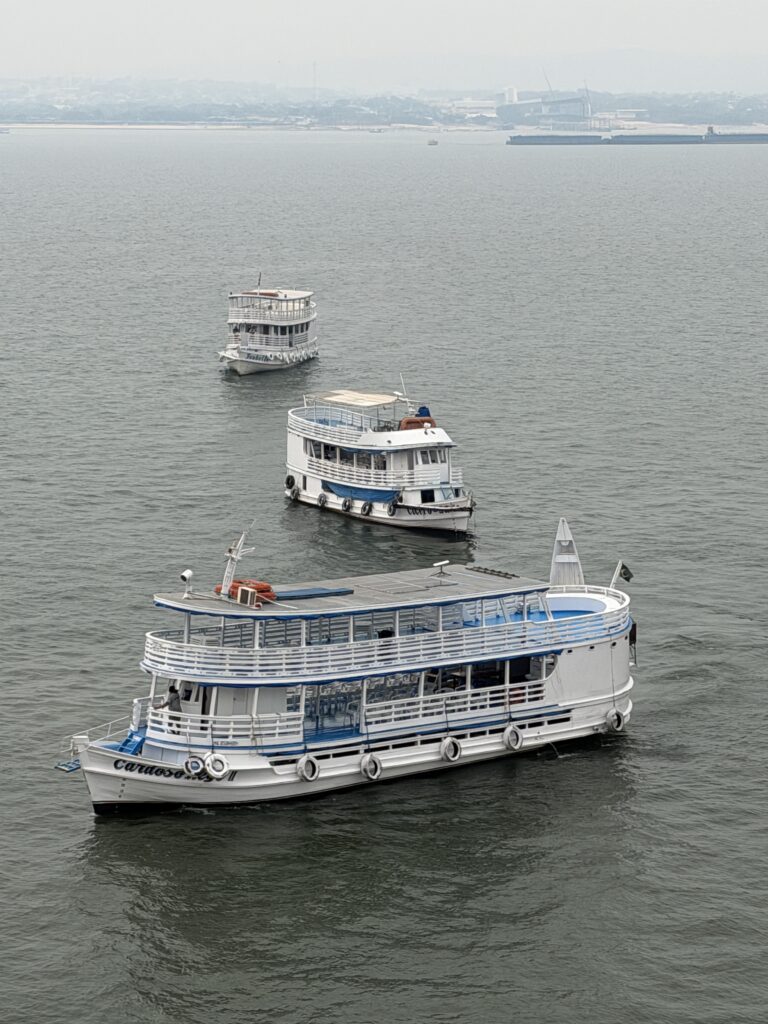
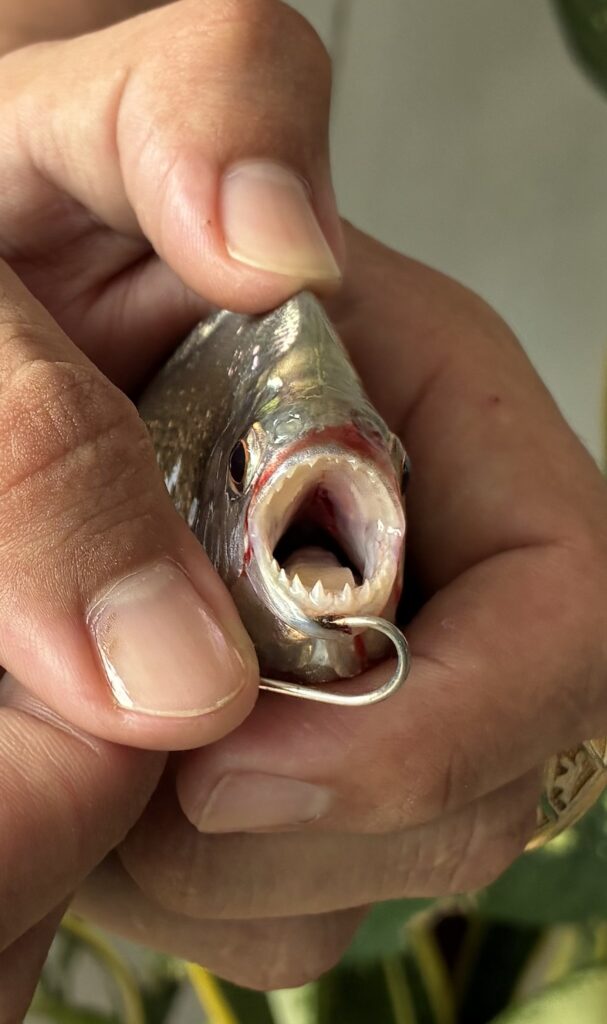
The boats we used for our excursion and one of the piranha close up to see the teeth.
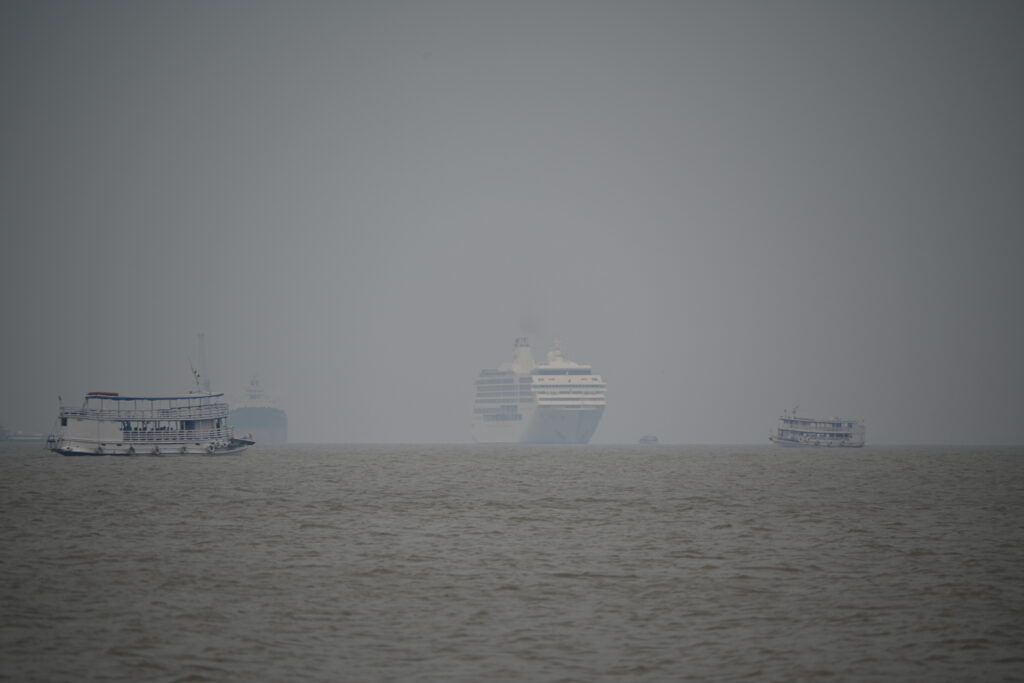
You can see how the smoke has made everything hazy. When sailing our “fog” horn is usually going off to warn small boaters since visibility is so bad.
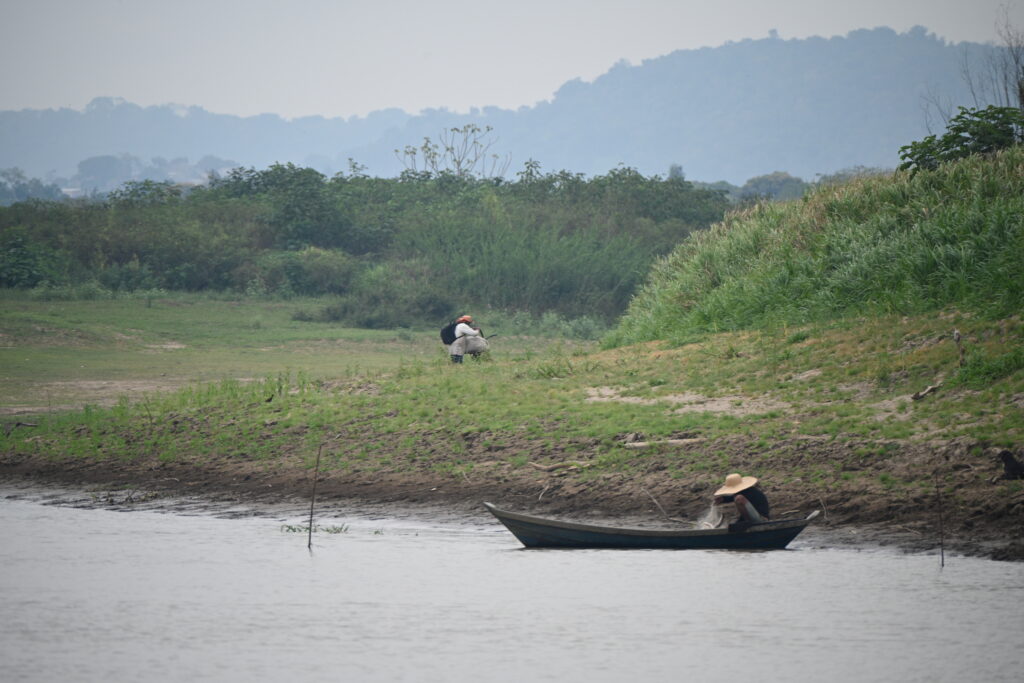
There are lots of these small fishing boats and they sell their catch at the local markets daily.
There was some confusion getting back to the boat again because of concerns that the ramp from the platform was too steep. They had us float around for a bit and then took us to a wharf where we could get off and the ship’s tenders could come and get us. This added an extra hour to our excursion and several people were getting upset at the change in plans.
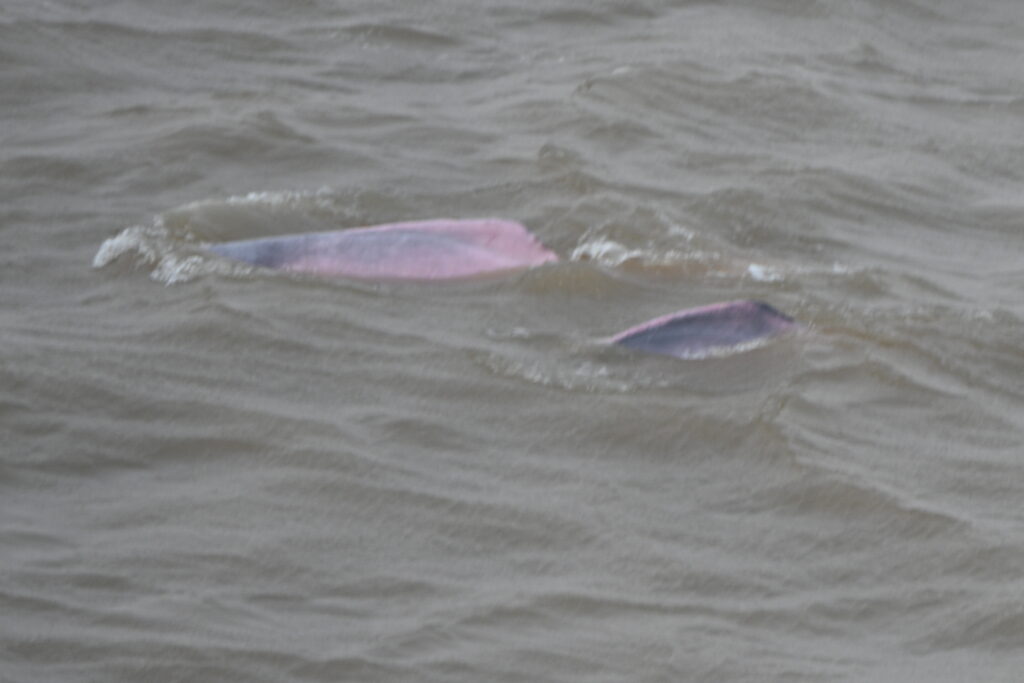
We did see several dolphins in the river. They have gray and pink dolphins in the Amazon. We would see them but very hard to get pictures of them.
We got back to the boat late in the afternoon and grabbed a bite up at the pool grill since everything else was closed and then cleaned up for cocktails at 6.
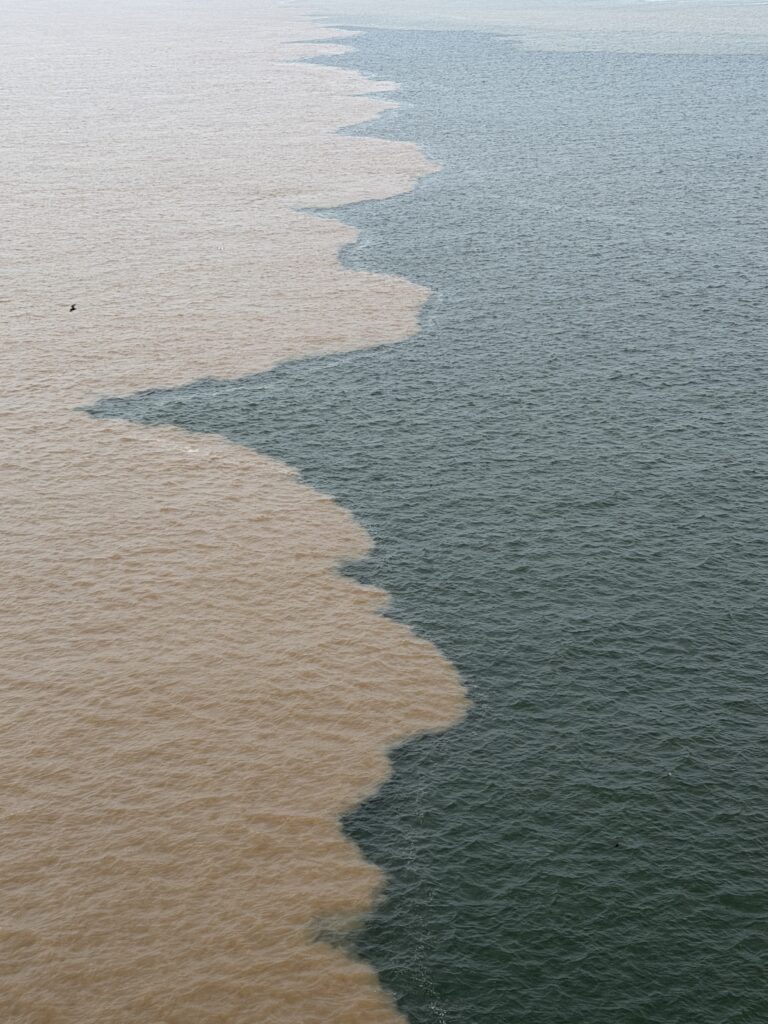
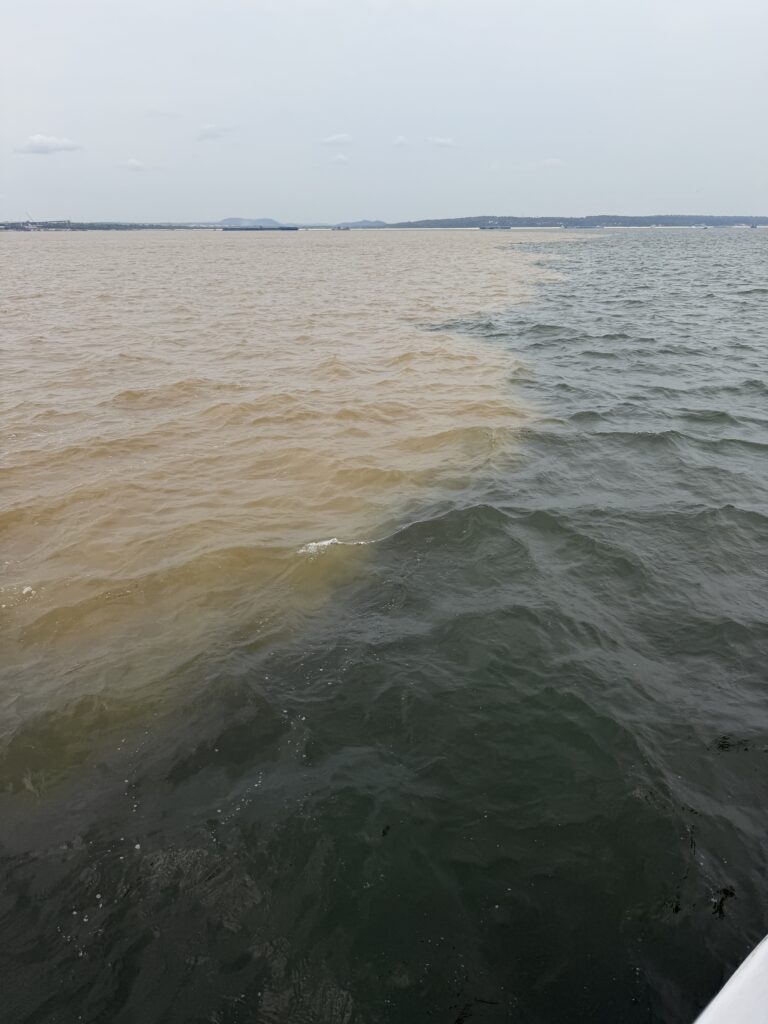
The demarkation line as we sailed on the Amazon away from Santarem.
One of the things that the Amazon river is famous for is “pink” dolphins. It is the largest species of river dolphins and adult males can average 400 pounds and up to 8 feet in length. They have a very short dorsal fin and they are very “shy” We saw lots of them around the boat when we were anchored but it is hard to get a picture of them. They are also considered endangered since 2018.
We are headed to Manaus which is the farthest point on the Amazon that we are going. It is about 1000 miles from the Atlantic Ocean.
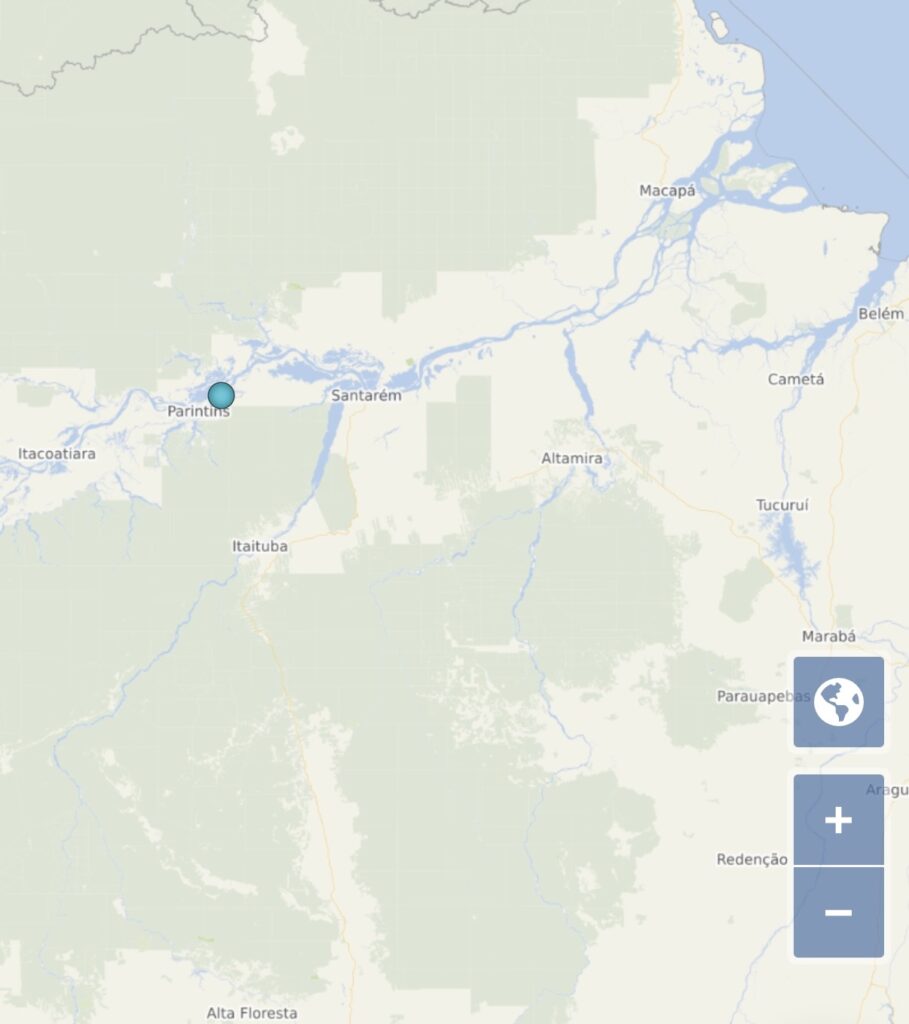
Our current location on the Amazon.
Any reason given as to what keeps to two rivers from mixing?