February 28th, 2026
Our excursion today was back in Luxor. Luxor has so many of the ancient sites to visit. Temple of Karnak, Luxor Temple, Valley of the Kings including the tomb of King Tut, The Colossus statues and the Temple of Hatshepsut, who was Egypt’s great female pharaoh. We started off at 8am and our first stop was valley of the Kings. You drive into the limestone mountains and it seems like you are in the middle of nowhere. There is nothing for miles around and it is hard to imagine how this area was ever found to begin digging all these pharaoh’s tombs. Valley of the Kings is where 19 pharaohs are buried.
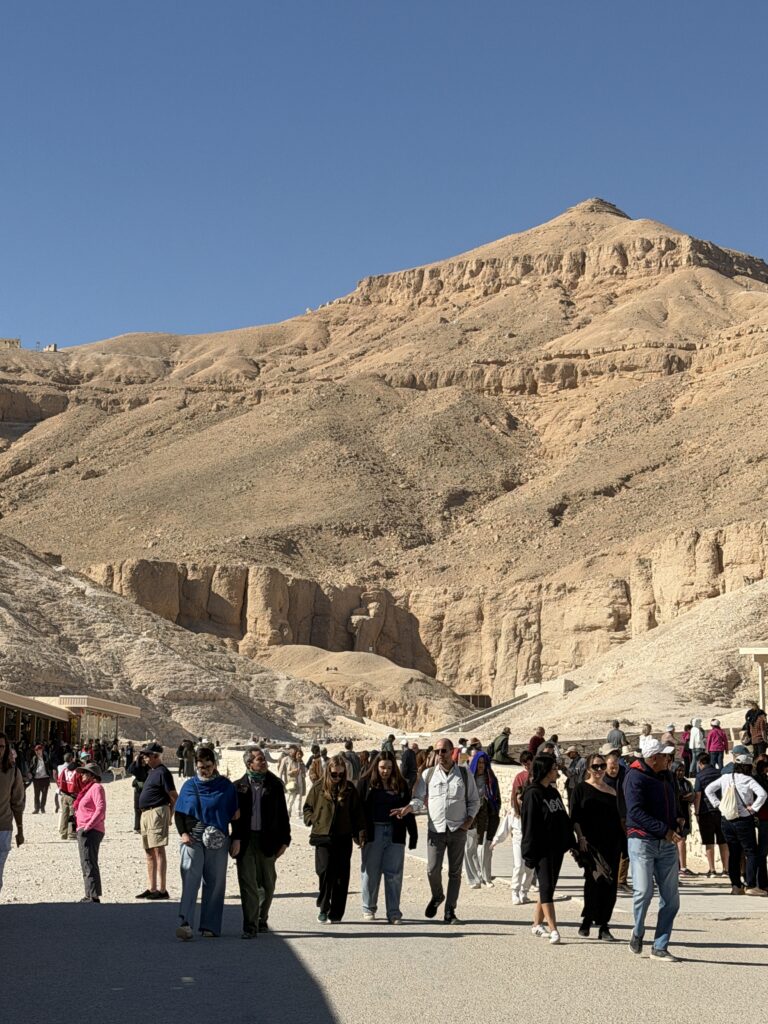
Valley of the Kings
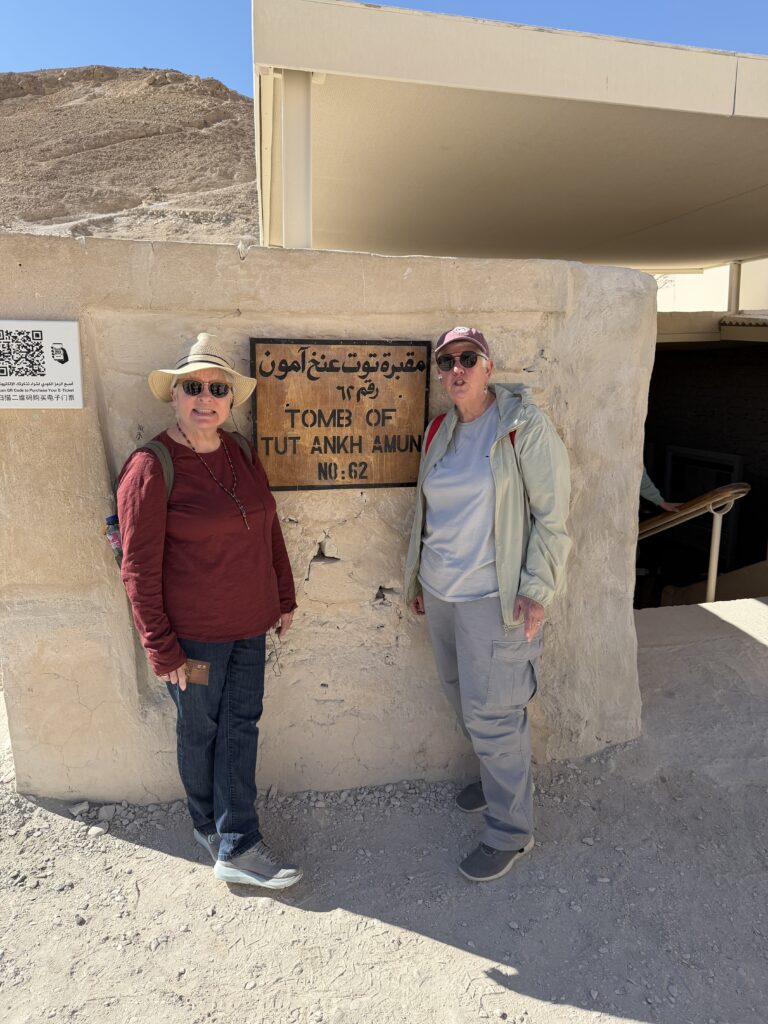
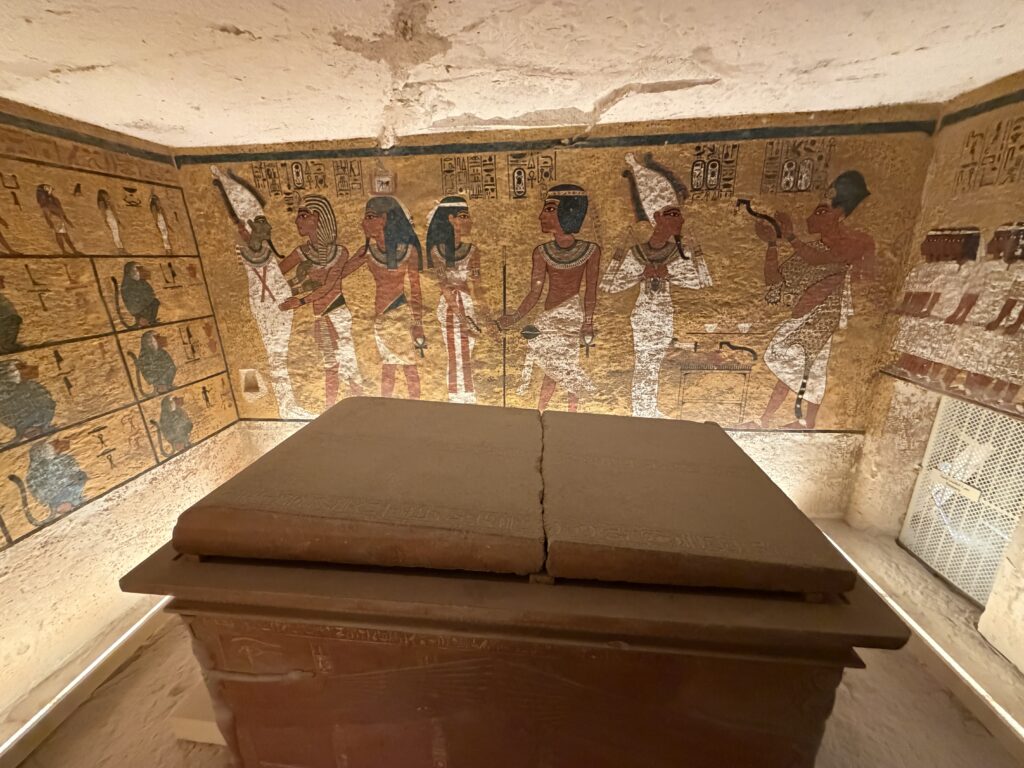
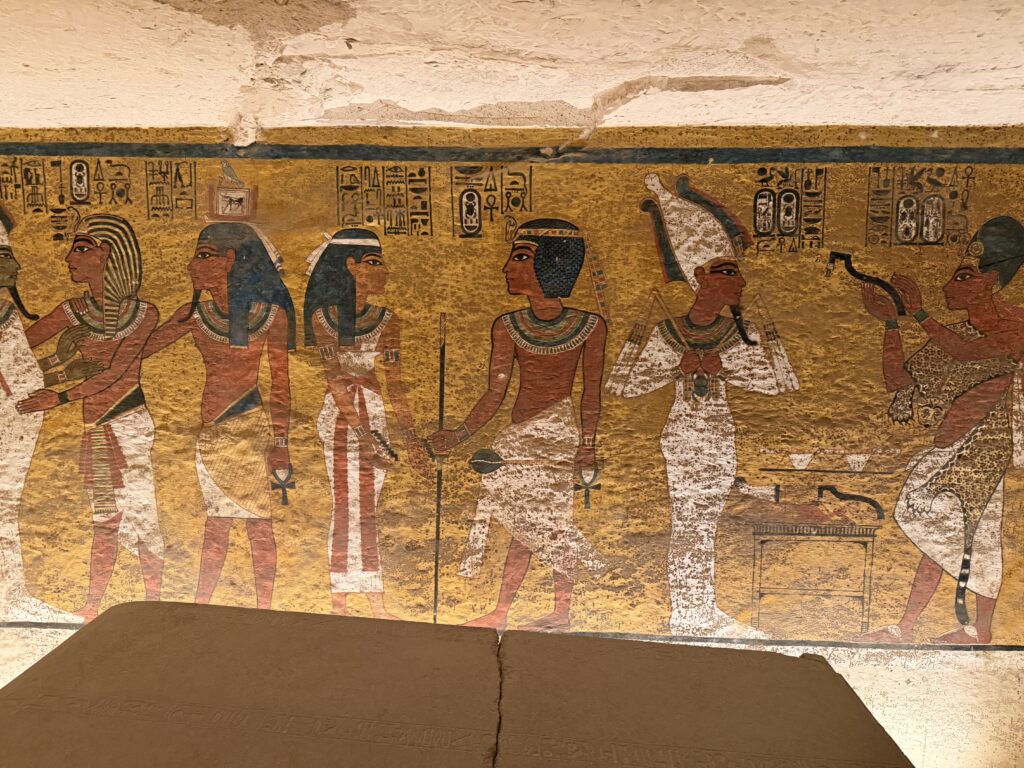
King Tut’s tomb
For several of the tombs you need special tickets like King Tut and Seti I who was the father of Ramses II. The tombs were all raided before being discovered for archaeological purposes except King Tut’s tomb which is one of the smallest tombs since no one was prepared for his death at 19. His tomb was hidden until 1922 when a servant boy accidentally stumbled upon it while fetching water. His tomb is not as deep as some of the other ones.
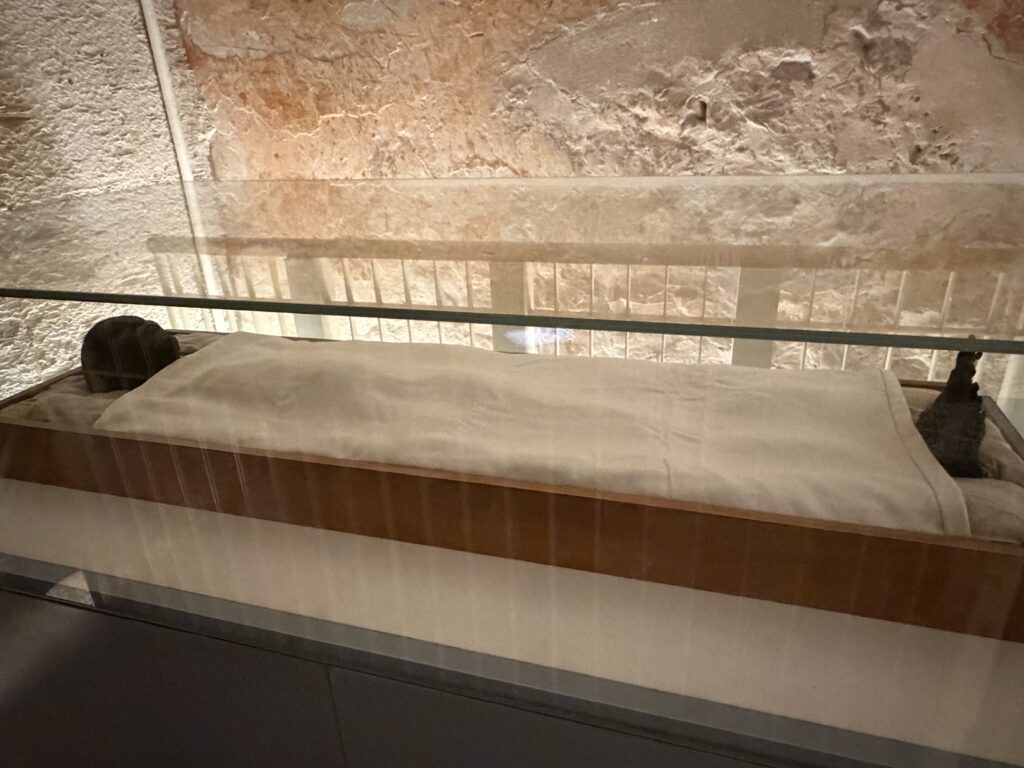
The first tomb we visited was King Tut and his mummy, what is left of it, is still there. Just his head and feet. The rest of the body was severely damaged by the archeological team when removing the death mask & linen wraps. His sarcophaguses and death mask are in Cairo at the new museum which we saw when we were there.
The paintings in his tomb are not as extensive or as colorful as other tombs due to the short time frame to bury him. He was crowned at 8 and died at 18 so his reign was too short to amass much.
The next tomb was Seti 1 tomb, was discovered in 1817 and it is the longest and deepest tomb in the necropolis, extending approximately 450 feet into the limestone cliffs. It reaches a vertical depth of 318 feet, descending through multiple corridors, staircases, and chambers.
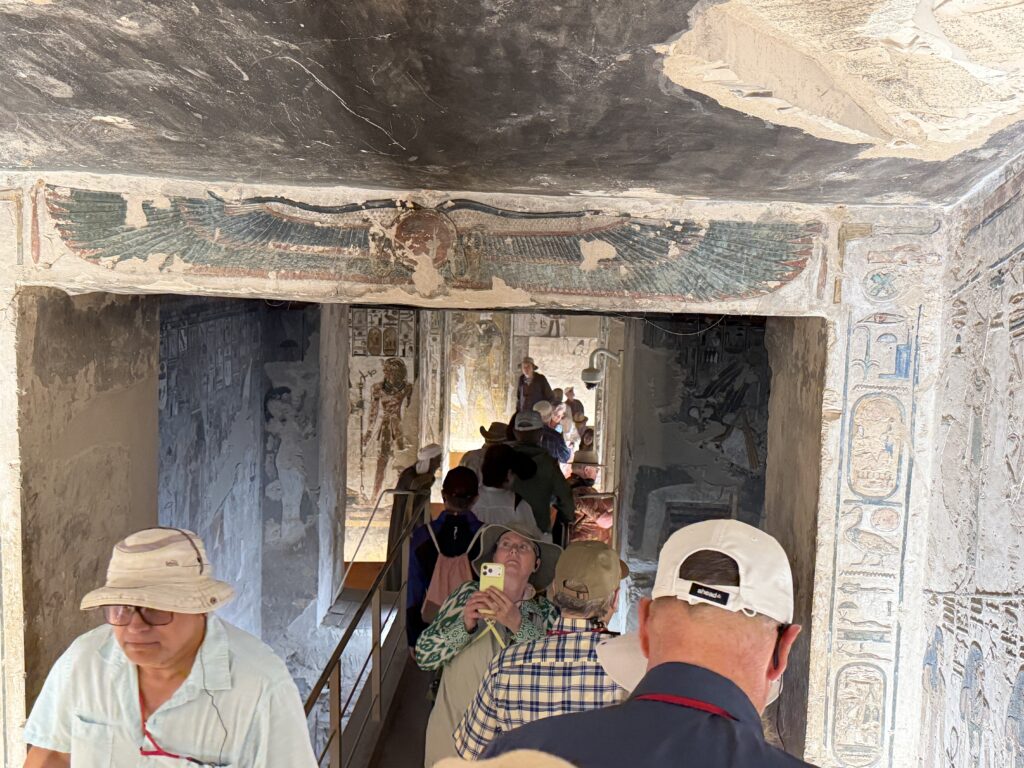
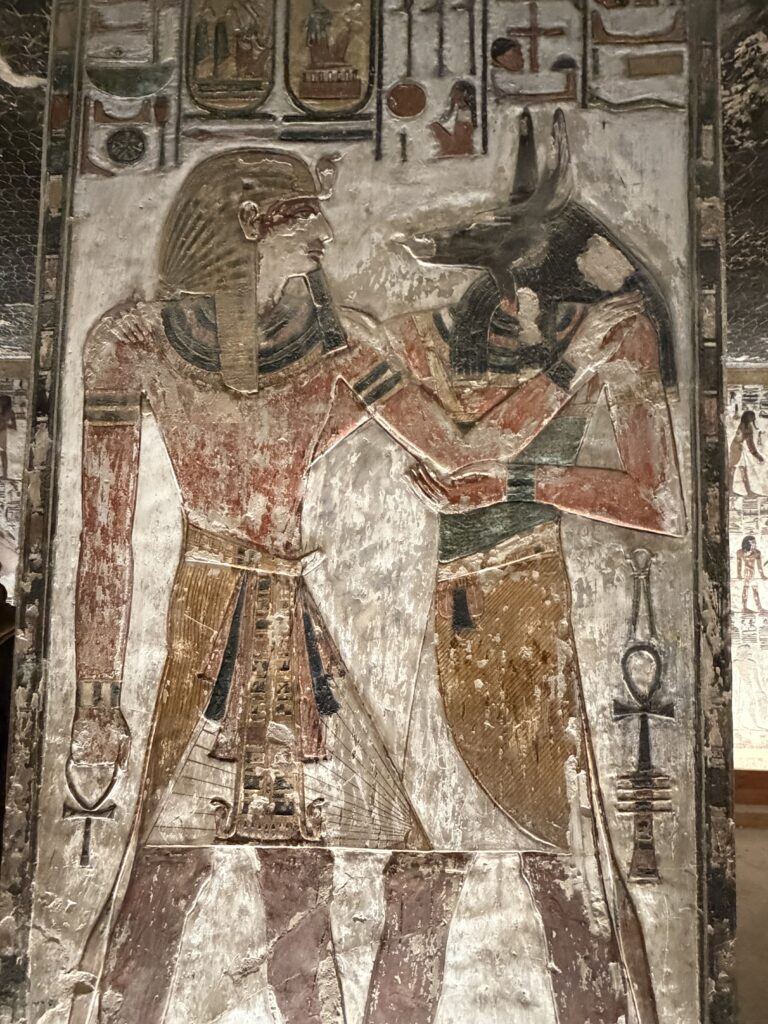
It has extensive rooms and colored paintings and hieroglyphics since they had years to paint it. You needed a special ticket to see this tomb which Viking provided at an extra 40 dollars just for this tomb.
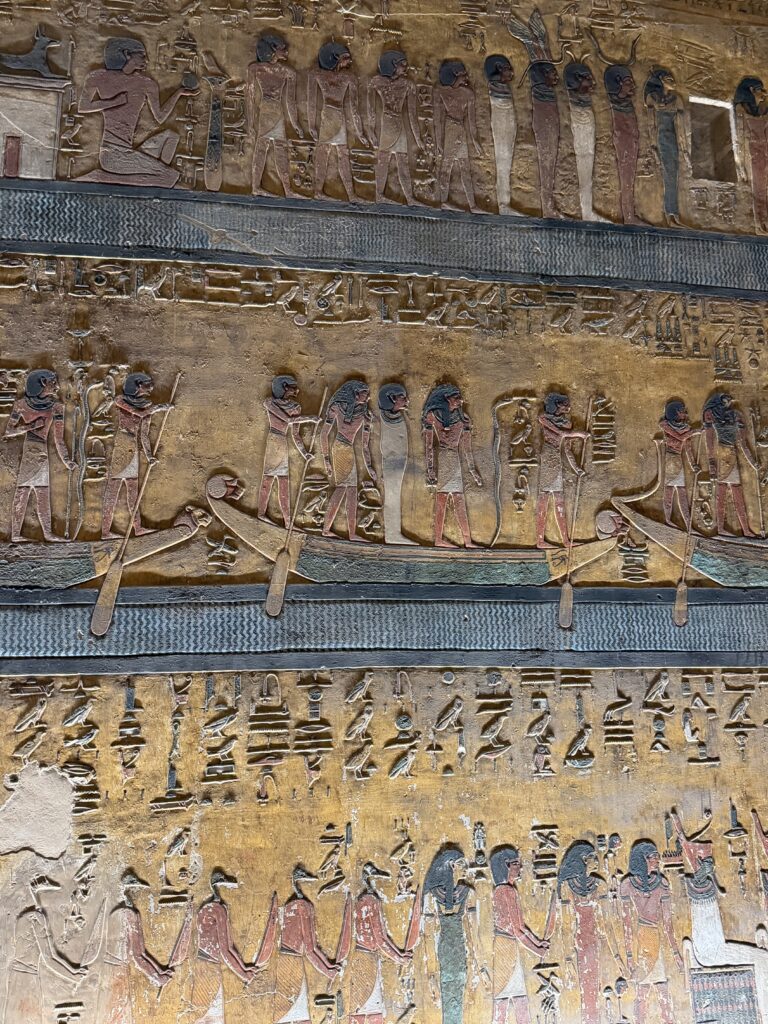
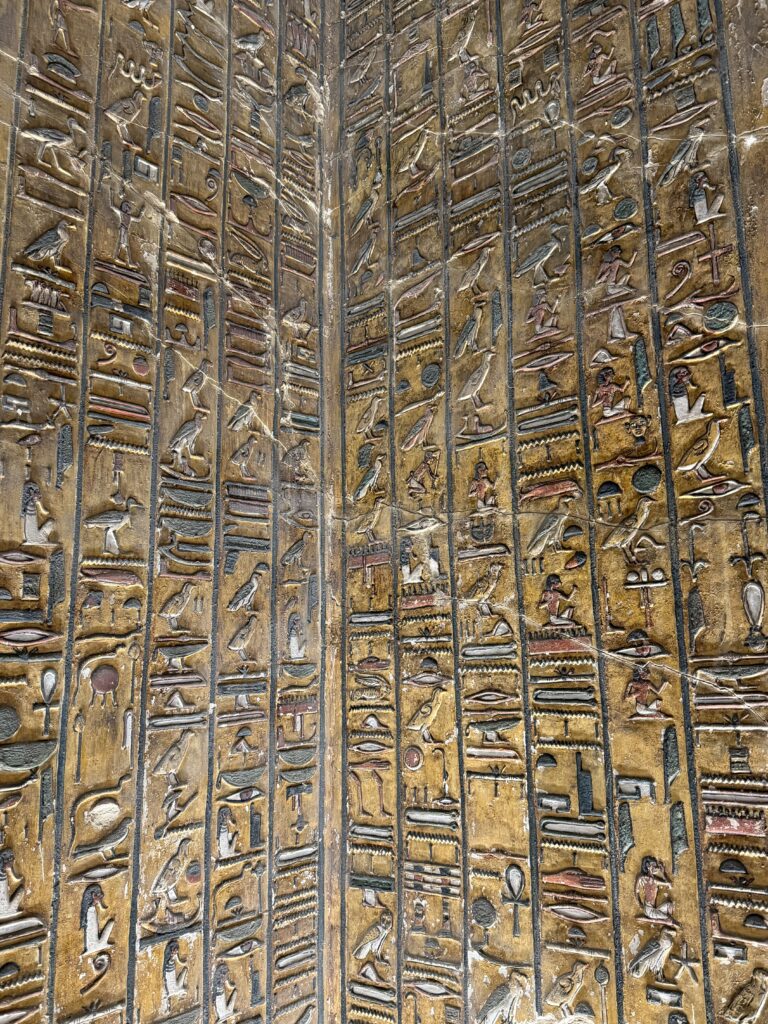
Tons of colored painting.
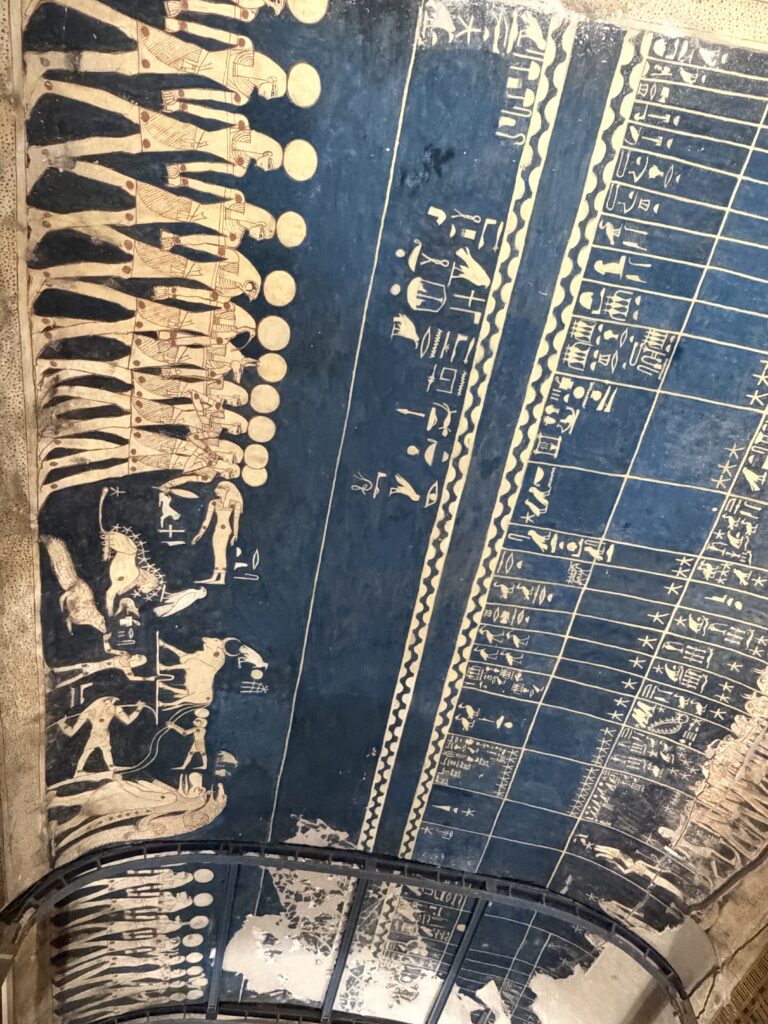
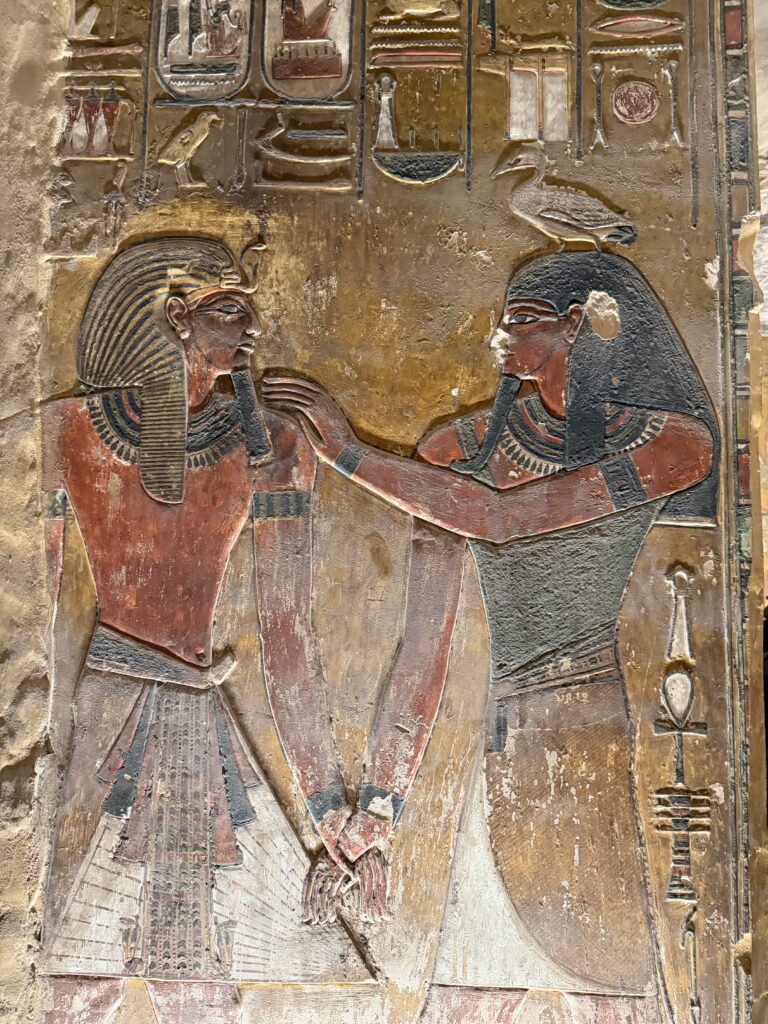
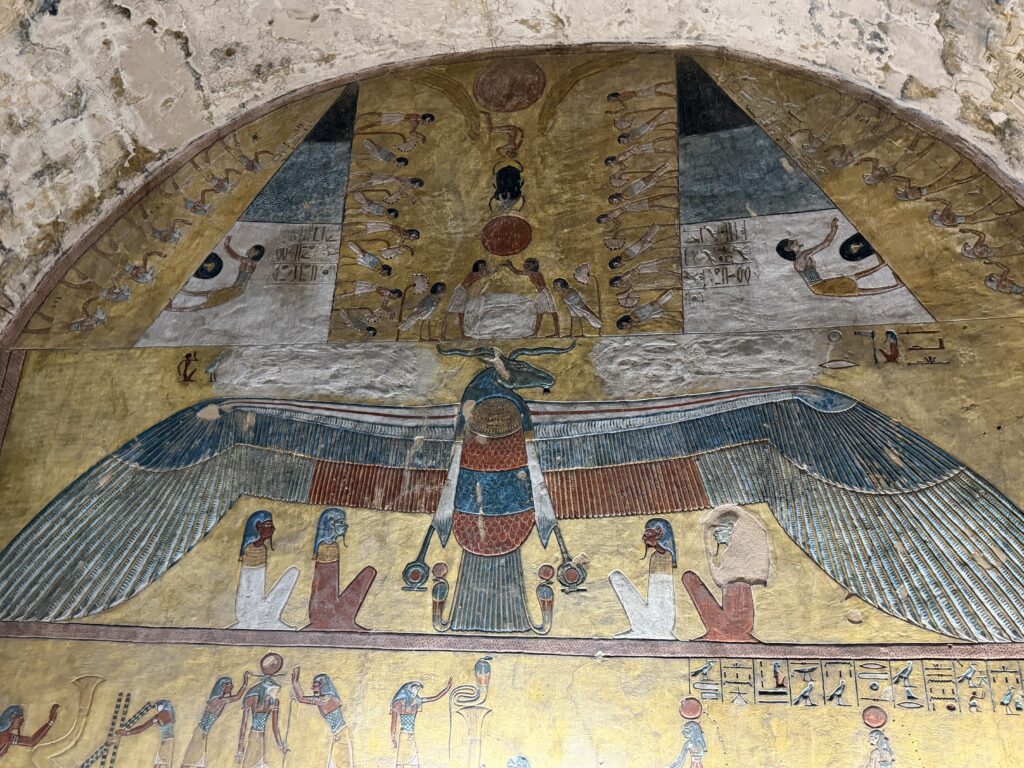
Even the ceilings were extensively painted. The colors are still vibrant due to being away from light and the dry heat. They used different minerals to color their paintings. Cobalt for blue and Malachite for green to name a couple.
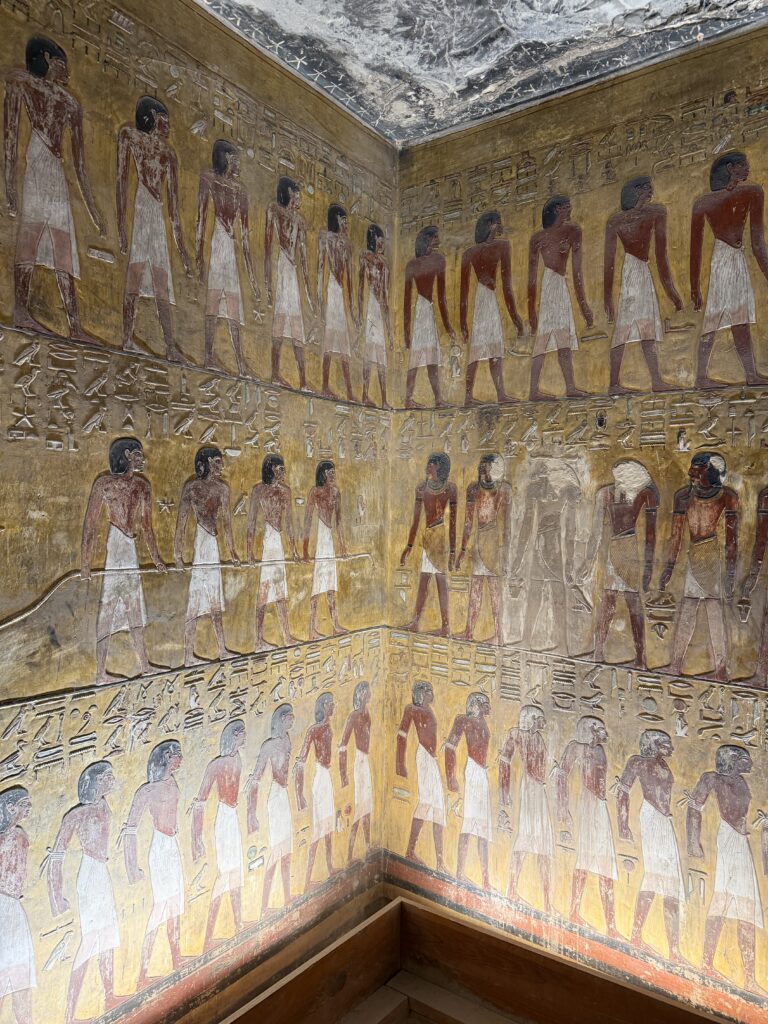
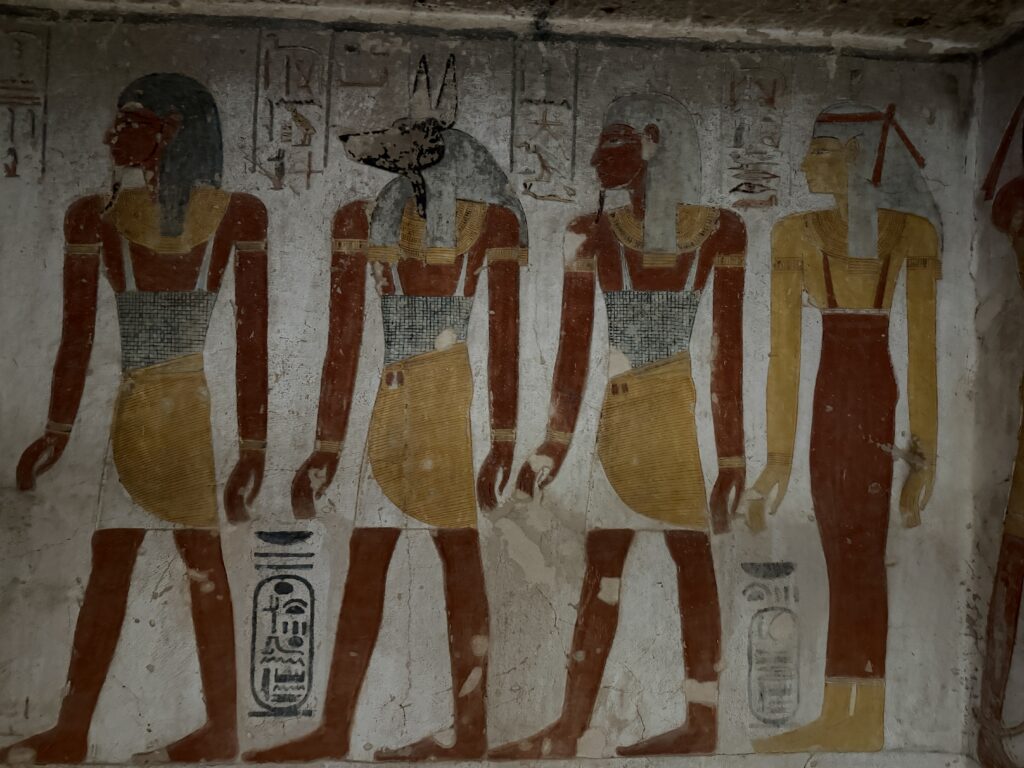
They then covered the painting with melted wax to help preserve them. The walls were covered with pictures of their different Gods and since the Christians did not find these tombs they were not defaced like what we have been seeing in all the temples.
Our general admission ticket also allowed us to pick 3 more tombs to visit. Some of the tombs had long lines and we did have some time constraints so we skipped some of the more popular ones.
So glad we are visiting when it is cooler. There is no circulation in the tombs and it got warm so in the summer with tons of people it would get pretty miserable.
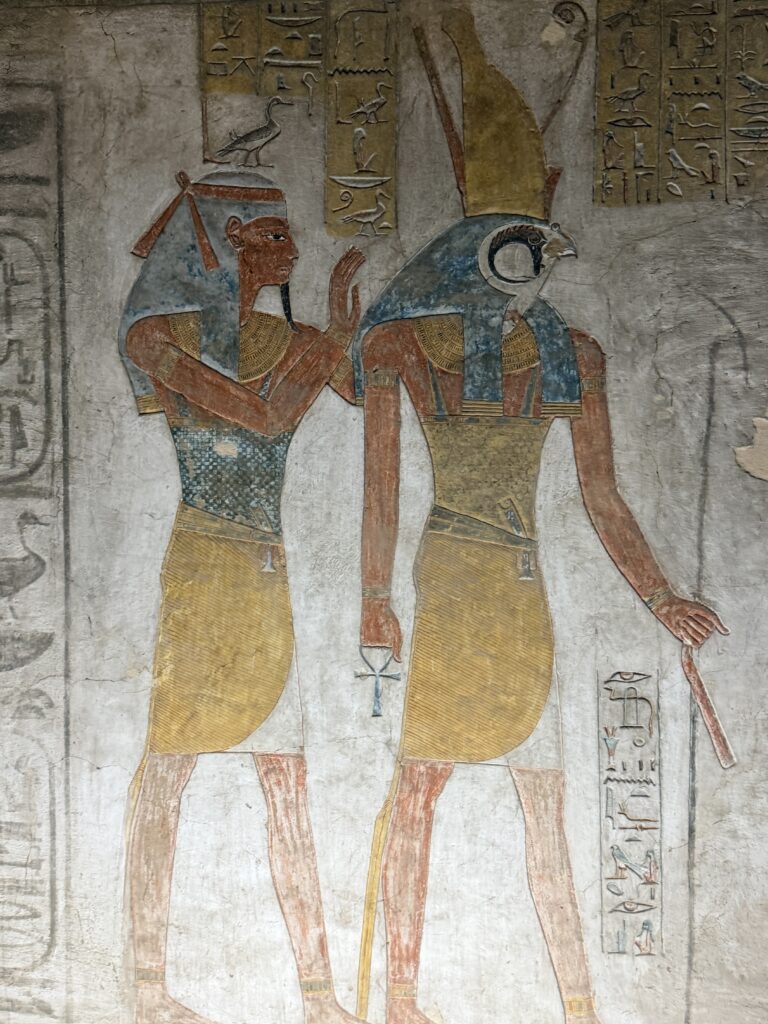
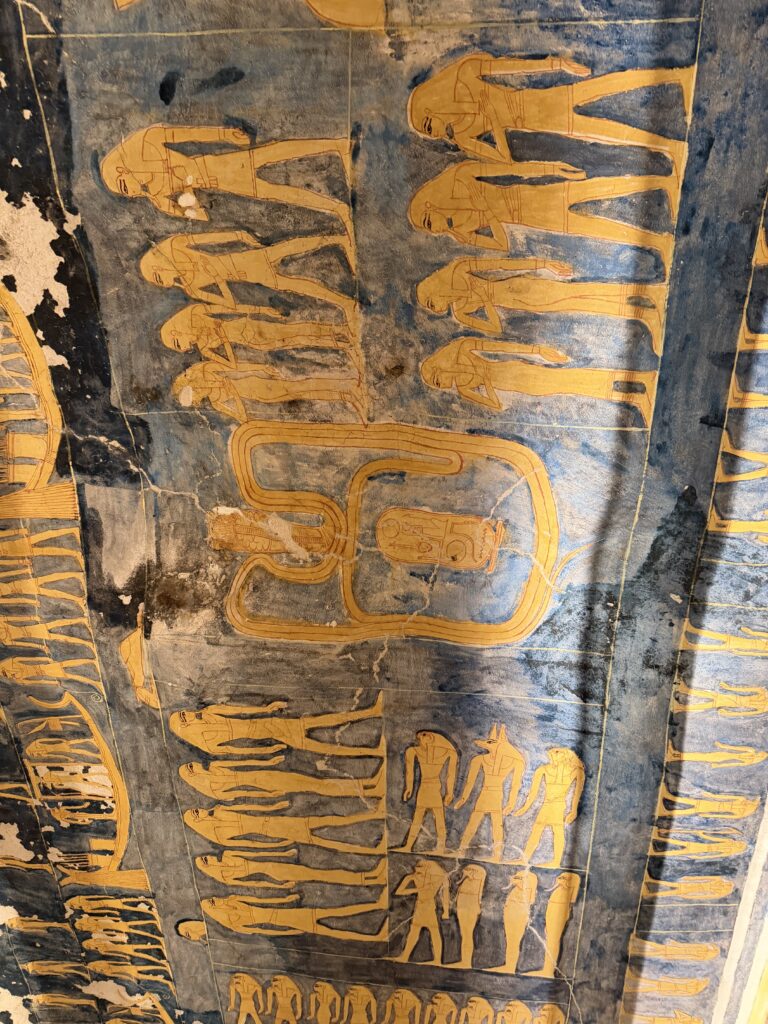
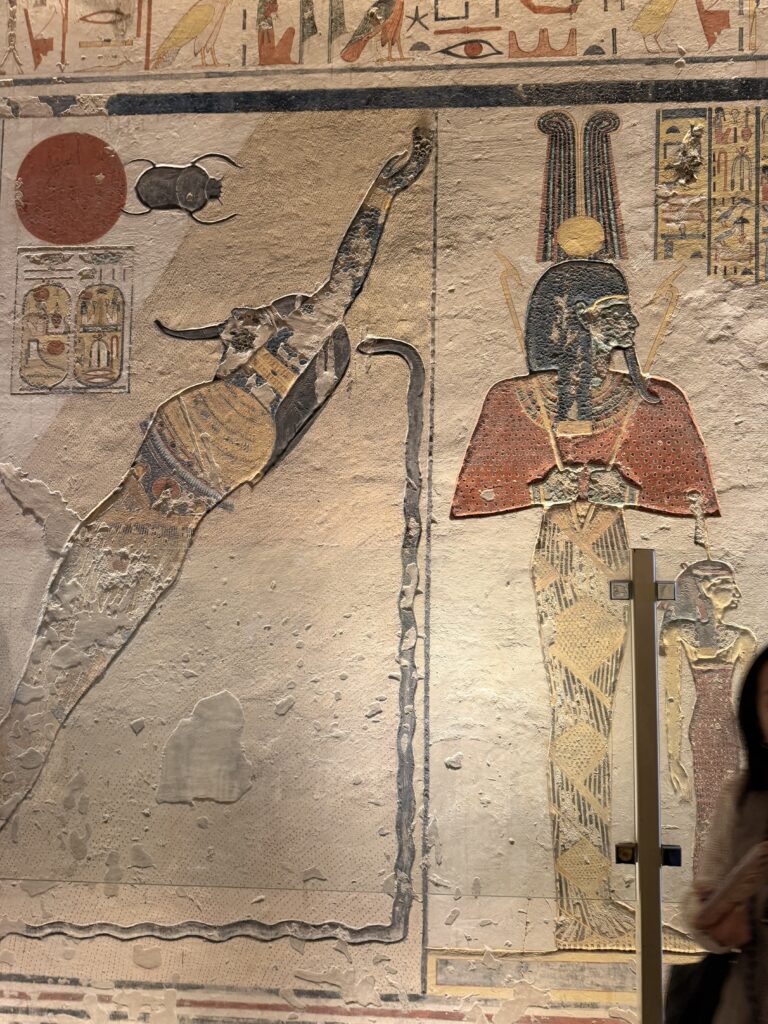
While it was beautiful to see and amazing to think how they accomplished this centuries ago after a few tombs you found that everything was the same.
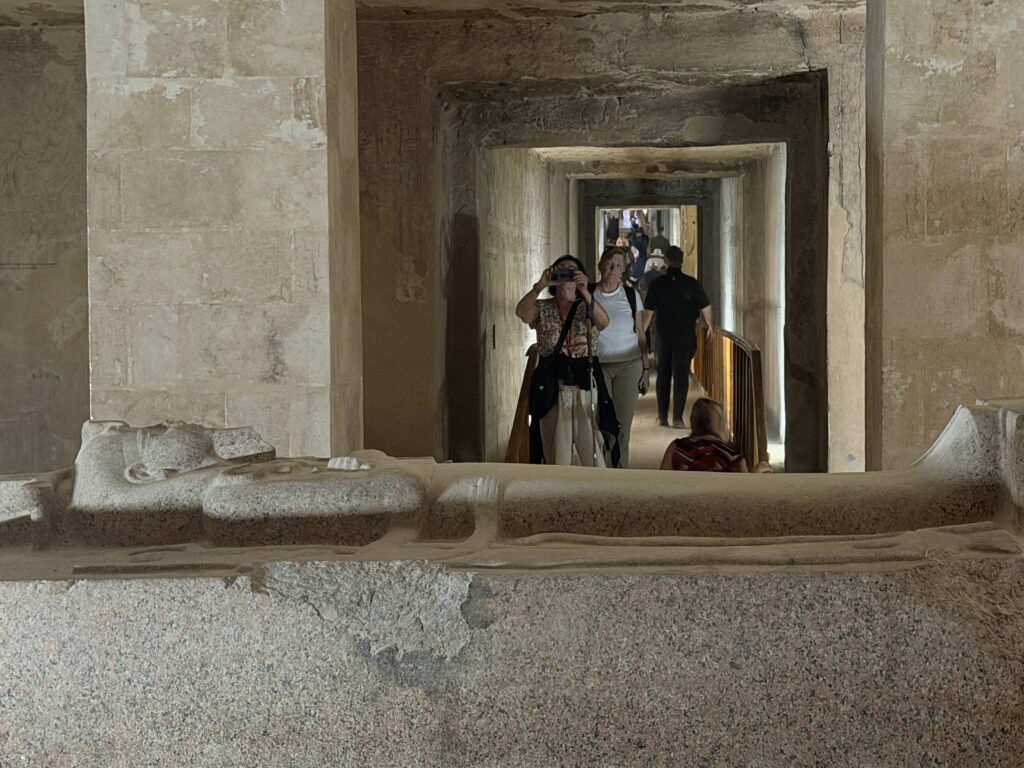
Several of the tombs had large carved sarcophagus that still remain even though the mummies have been removed.
At the end of all these Temple and sites you have to go through “valley of the vendors” as our Egyptologist refers to the area. Vendors come at you from all sides selling magnets, books, scarfs, clothes, carvings including cats and scarabs. You just ignore them unless you want something. We were told most items were made in China/beware. Whatever price they start with you should only pay 30% of that. I did buy a book on Valley of the Kings for 5US because of all the pictures and explanations of who the Pharaohs were. Much better than any pictures I could take at the crowded site.
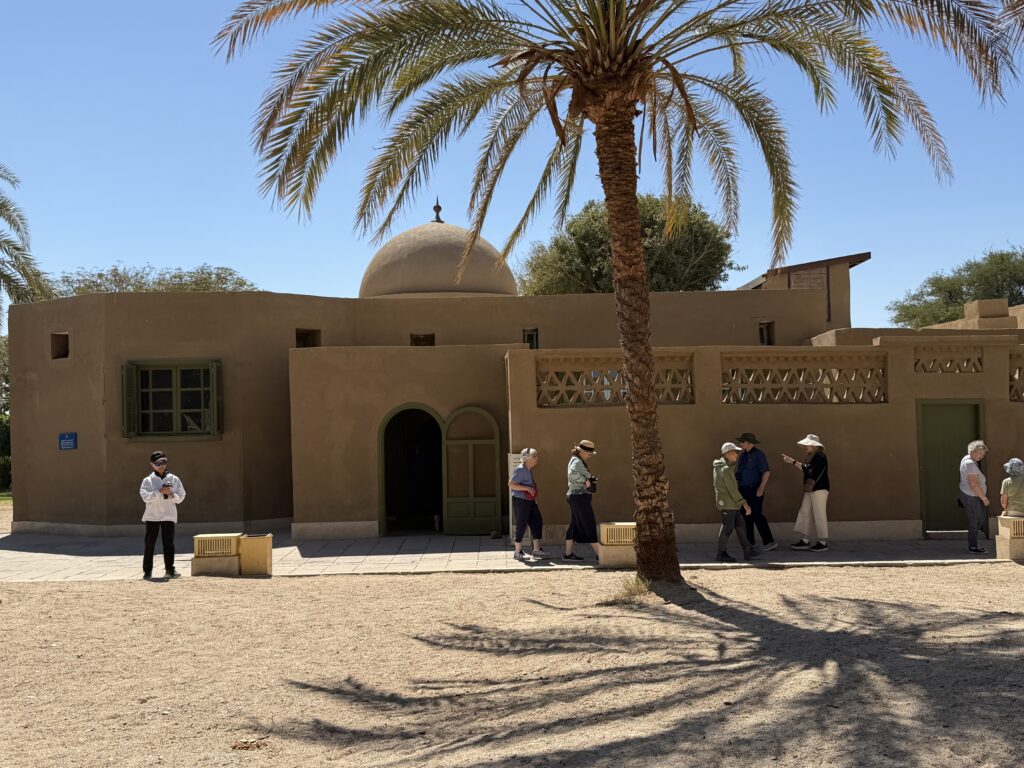
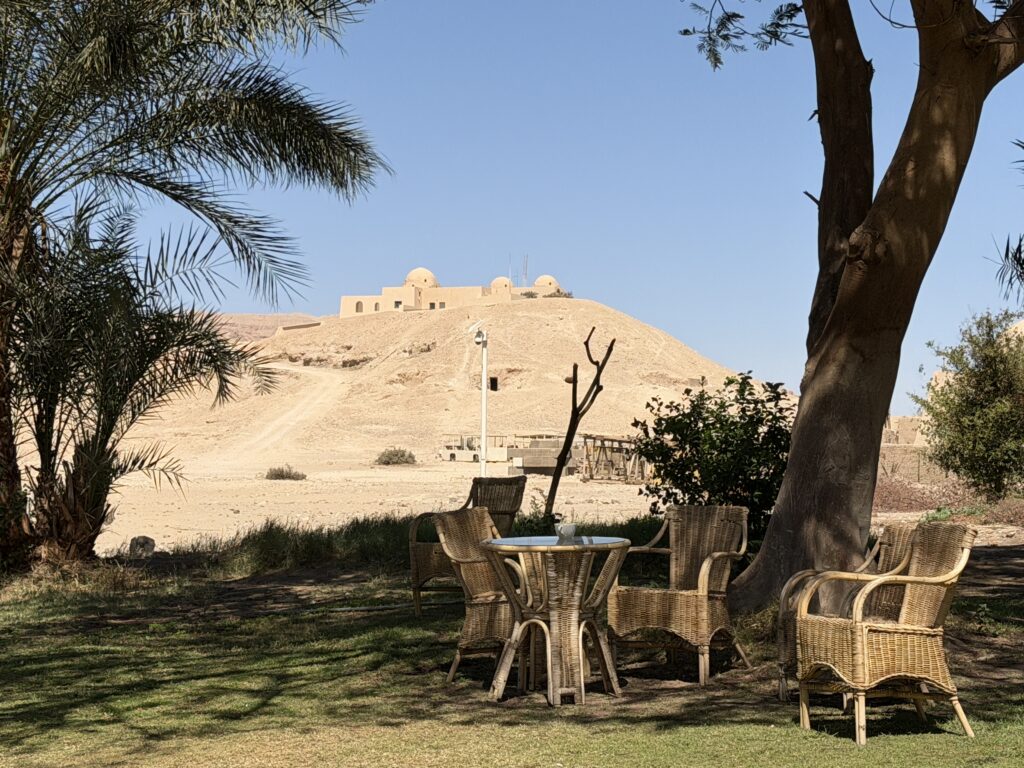
Our next stop was the house where Howard Carter lived. He was the British archeologist who discovered King Tut’s tomb (actually his local water boy) and spent years photographing, cataloging and excavating the tomb. He built a house close to the excavation site so he could be available at all times. His house even had a dark room.
The next stop was the Hapshepsut Temple. This Temple has a beautiful setting inside a canyon with towering mountains above it.
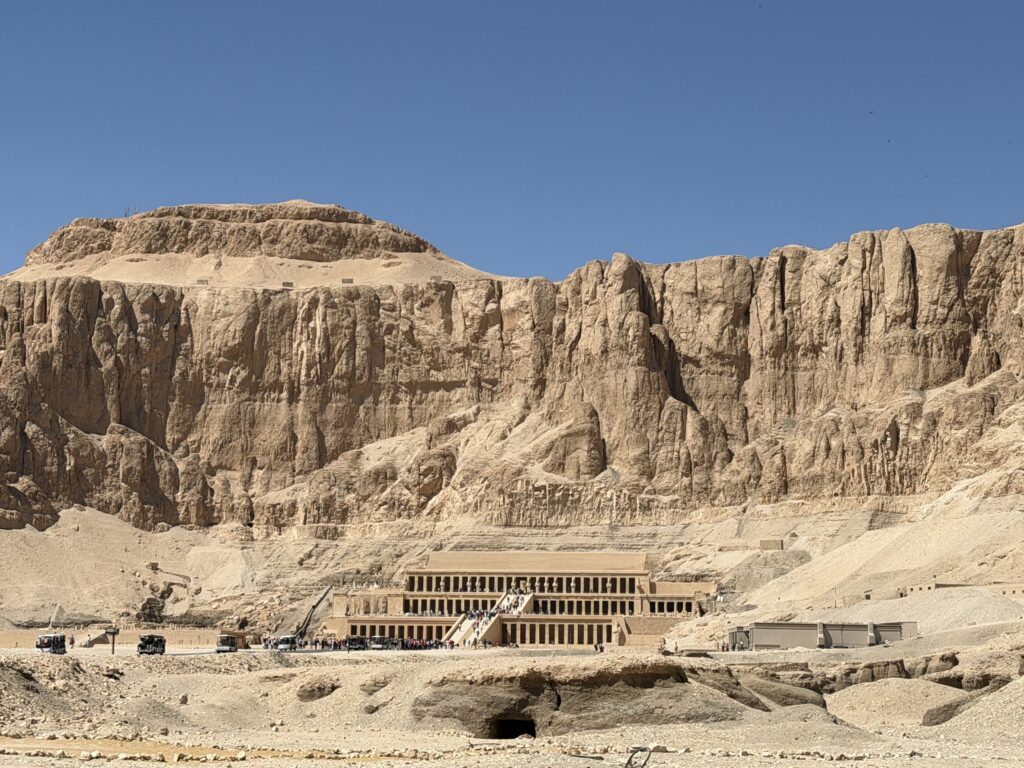
This site is also a reproduction because the majority of the Temple was destroyed by the successor of Hapshepsut. Her stepson, who took over the crown after her death, went to great extremes to obliterate all traces that Hapshepsut ever existed. Her cartouches and images were chiseled off and her statues demolished. Hapshepsut disappeared from history until 1903 when Howard Carter (same one who discovered King Tut’s tomb) found her tomb in 1903. She was Egypt’s most powerful female pharaoh.
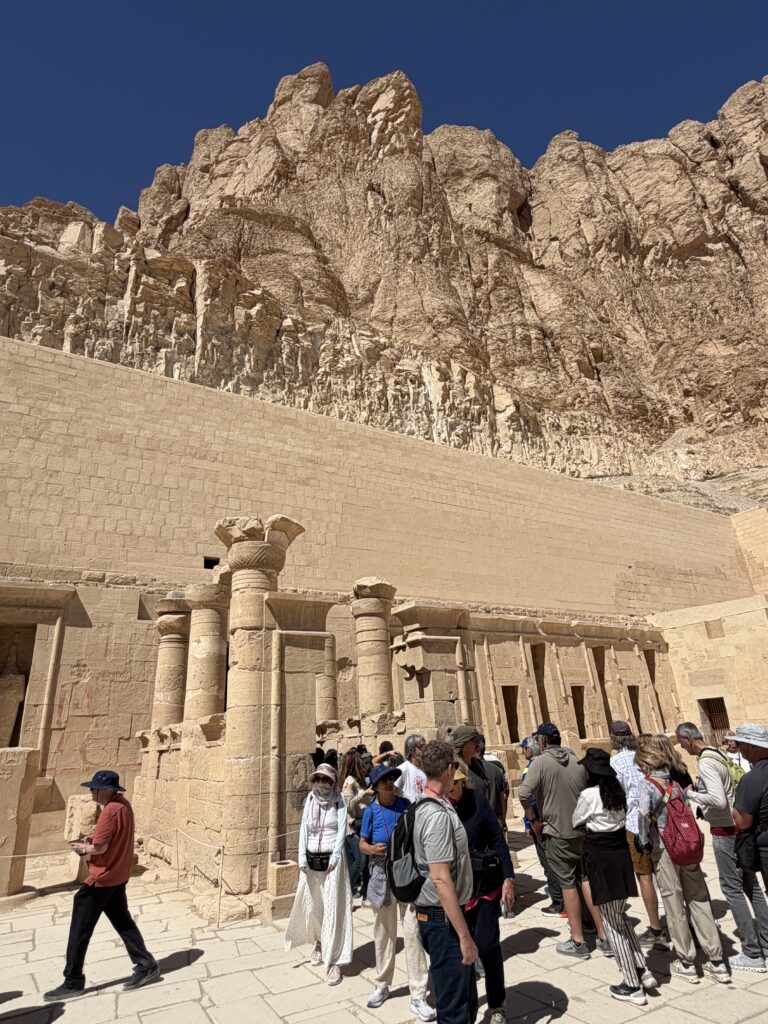
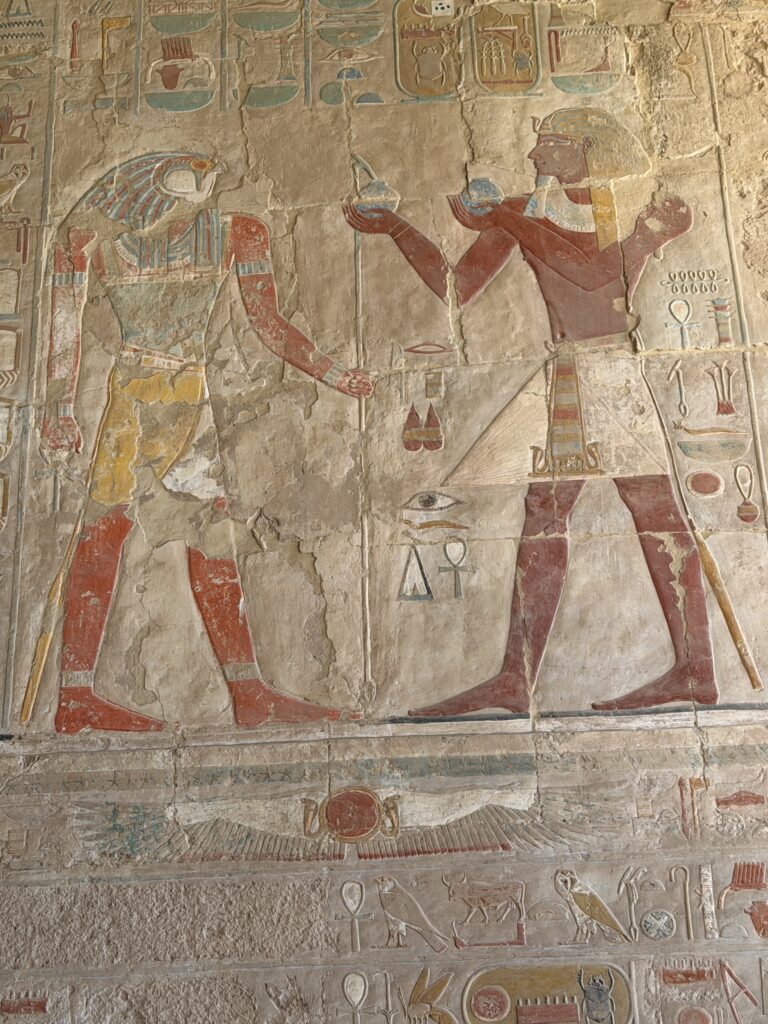
There is Roman influence in her temple design.
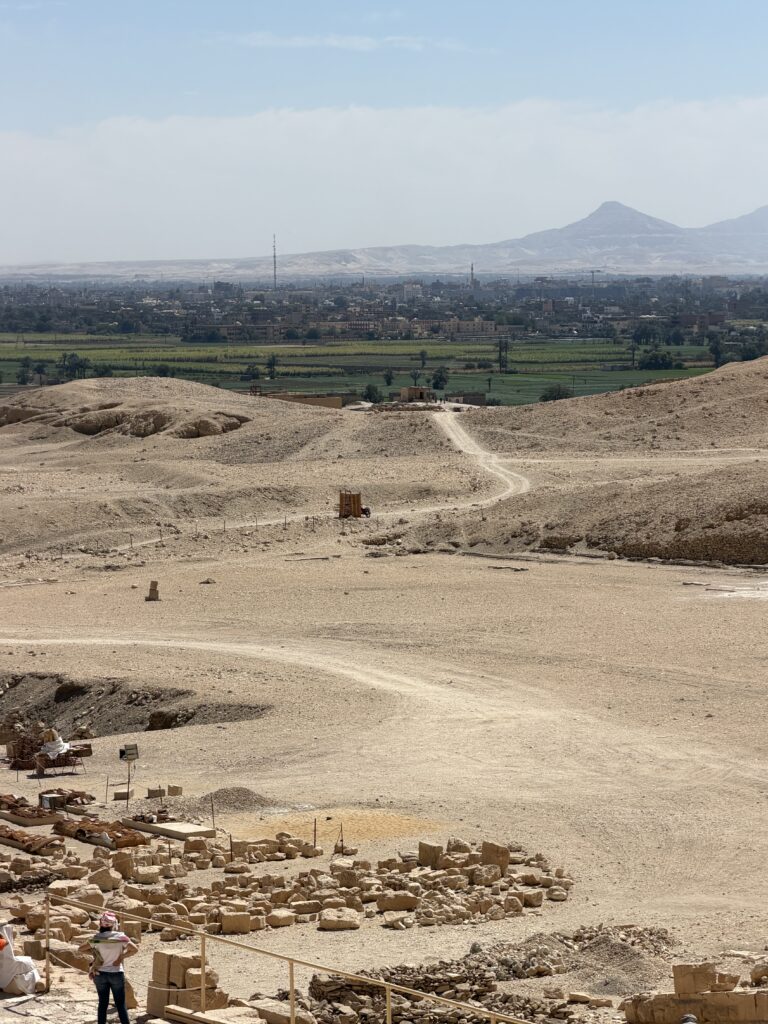
There are archeological sites all over. Some had activity but most did not. You can see the very clear delineation between the Sahara dessert and the Nile River basin which is green and lush.
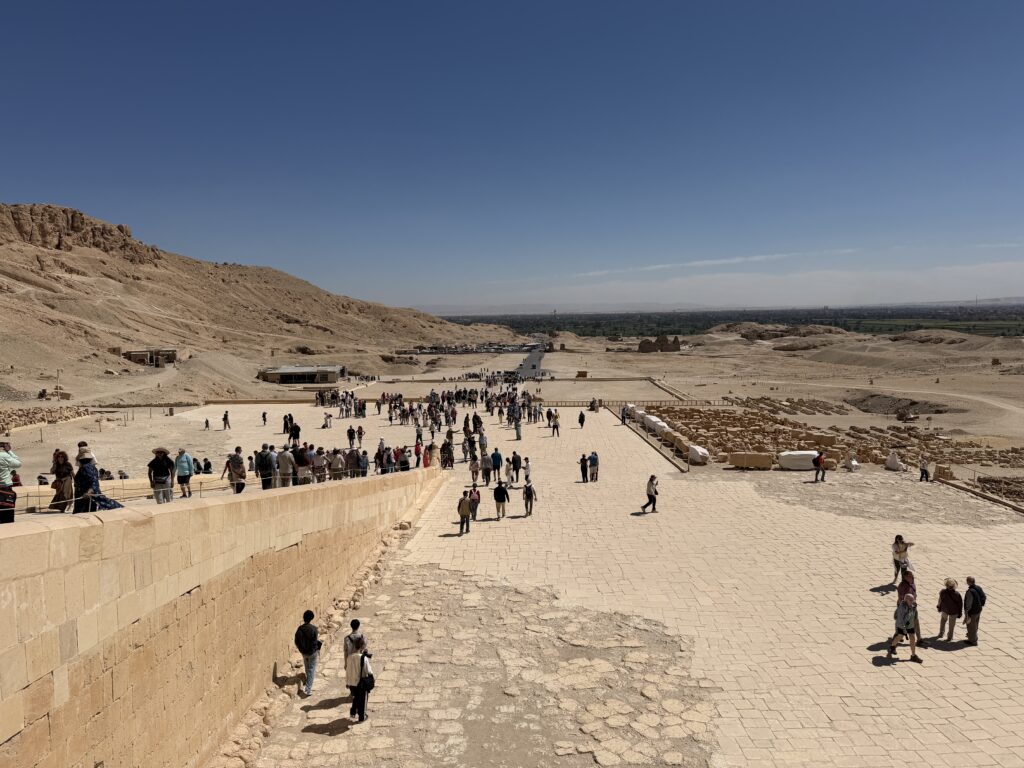
The site where the temple is located is very remote.
Our last stop was a brief picture stop at the site of the Colossus statues. Most are quite tall but all have been damaged by earthquakes
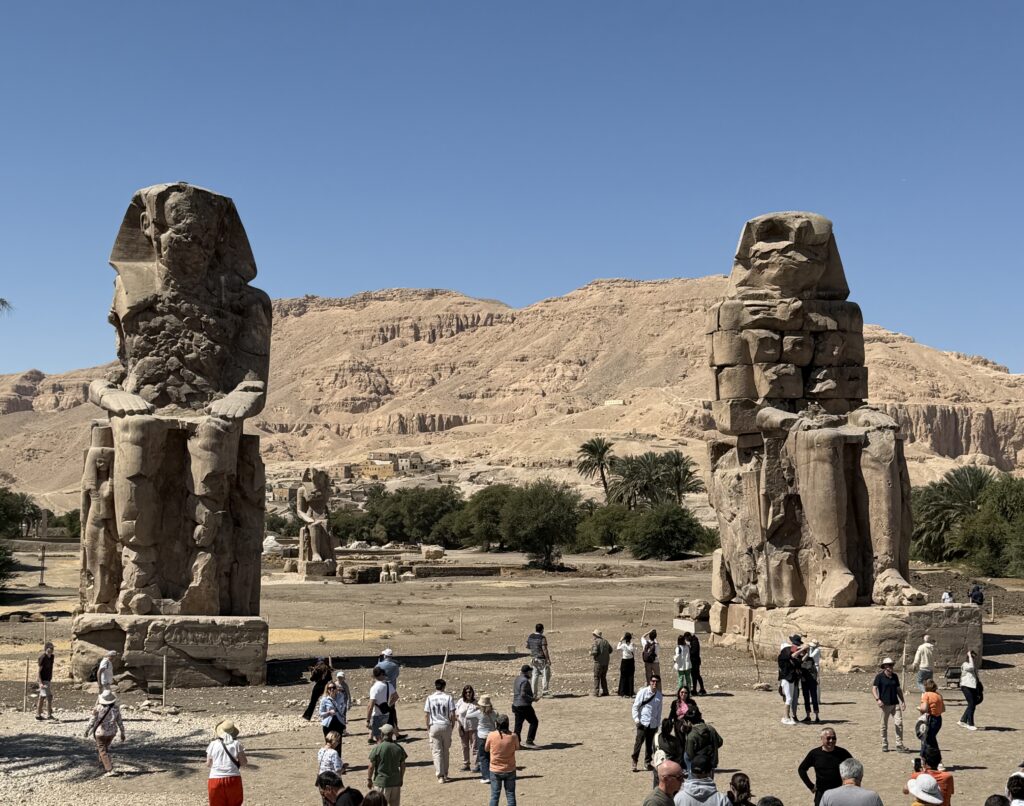
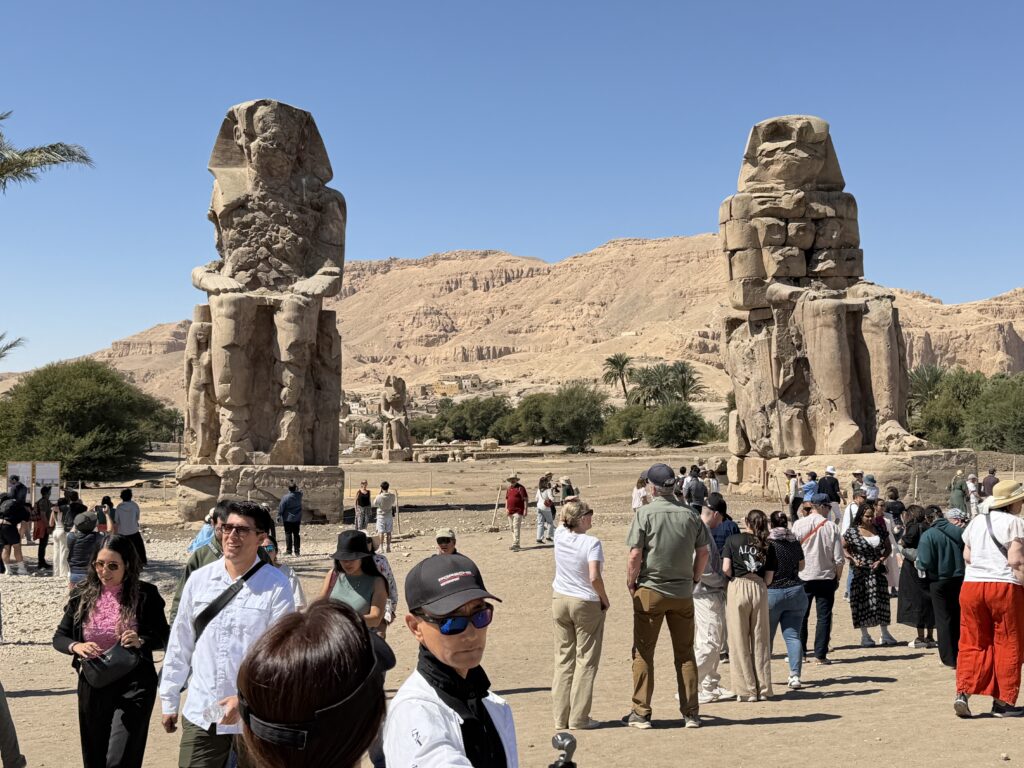
These statues are 60 feet tall, 3400 years old and weigh 720 tons each, carved from a single piece of stone; HOW?
We made our way back to the ship at 1:30 and had a nice lunch while we sailed away from Luxor. We had a free afternoon and we spent a lot of it up on the top deck reading and enjoying the view of life on the Nile. We have passed tons of river ships
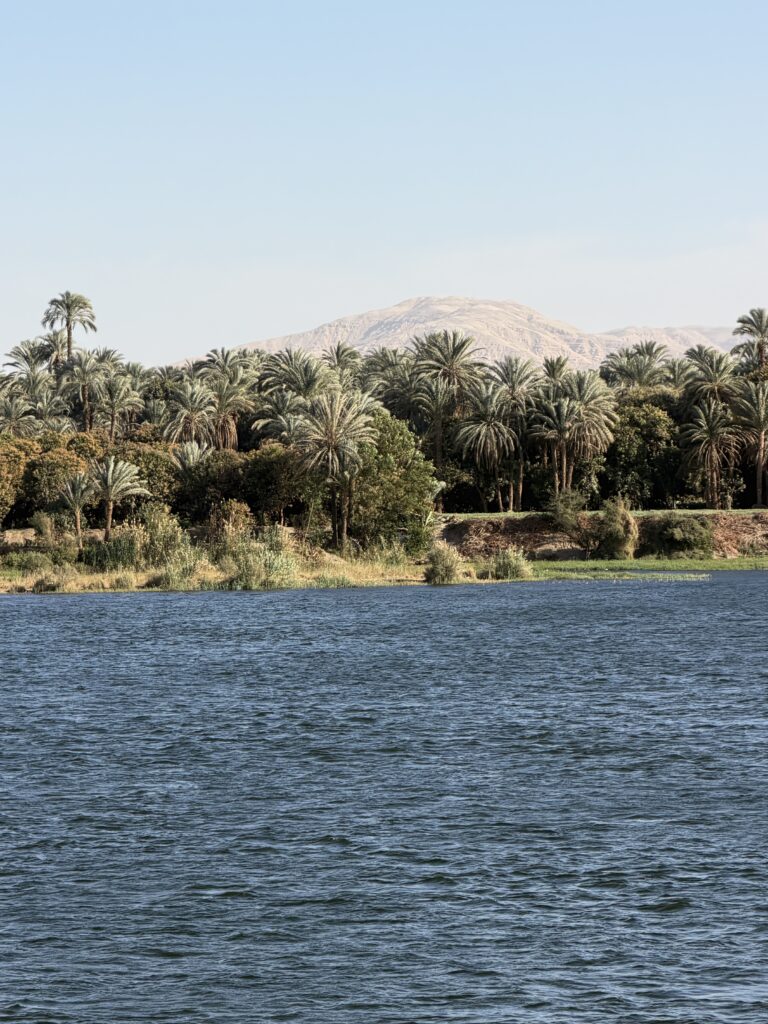
Cruising down the Nile.
We are sailing to Esna where we will arrive at 8pm. Tonight’s entertainment is the Whirling Dervishes which turned out to be 1 guy who danced in circles for 30 minutes at times twirling a very heavy cape over his head. The cape weighs over 30 pounds so how he does that for so long with 1 hand is pretty amazing.
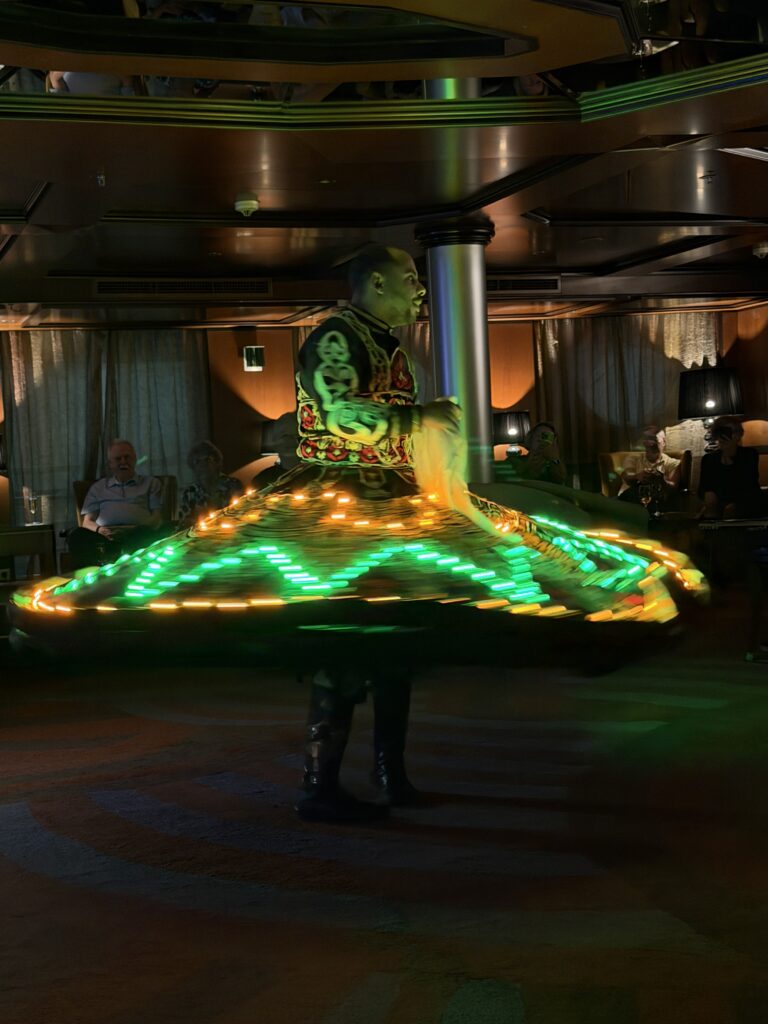
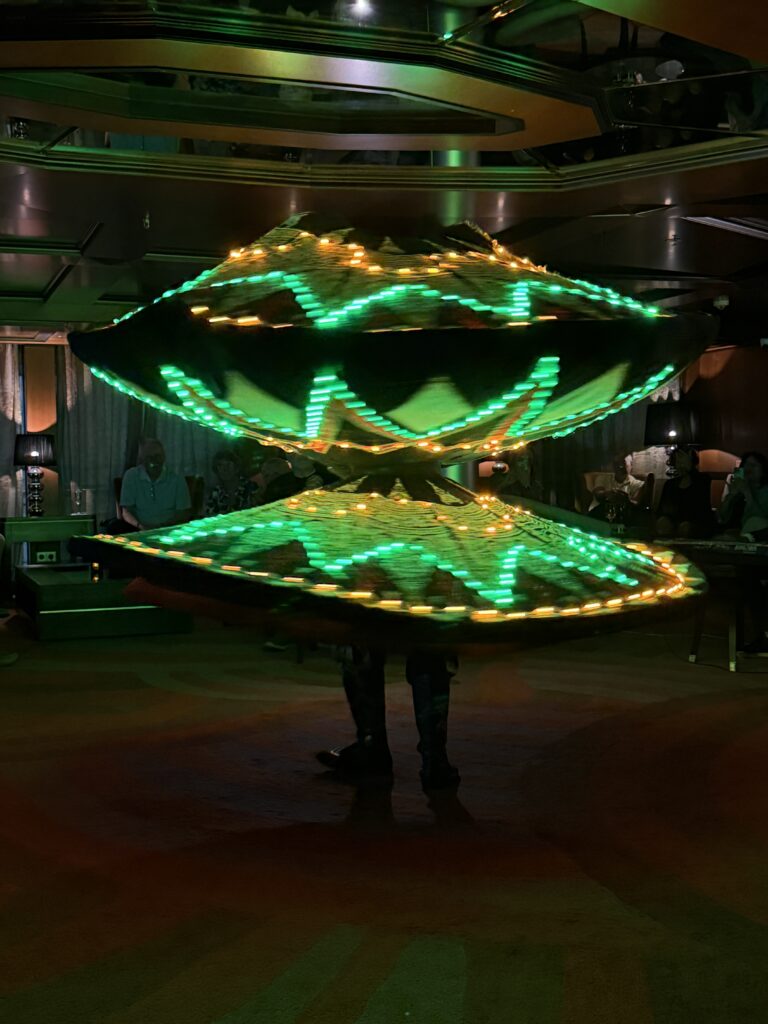
Whirling dervish dancer.
We are keeping track of what is happening in our region of the world, frightening, but Viking is keeping us well informed. We are safe and assured we will stay that way.